Serving Mission Viejo, CA and surrounding areas.(657) 390-1824
Saddleback Mission Viejo Concrete

Decorative Concrete in Mission Viejo, CA, Chosen to Pass the Architectural Committee

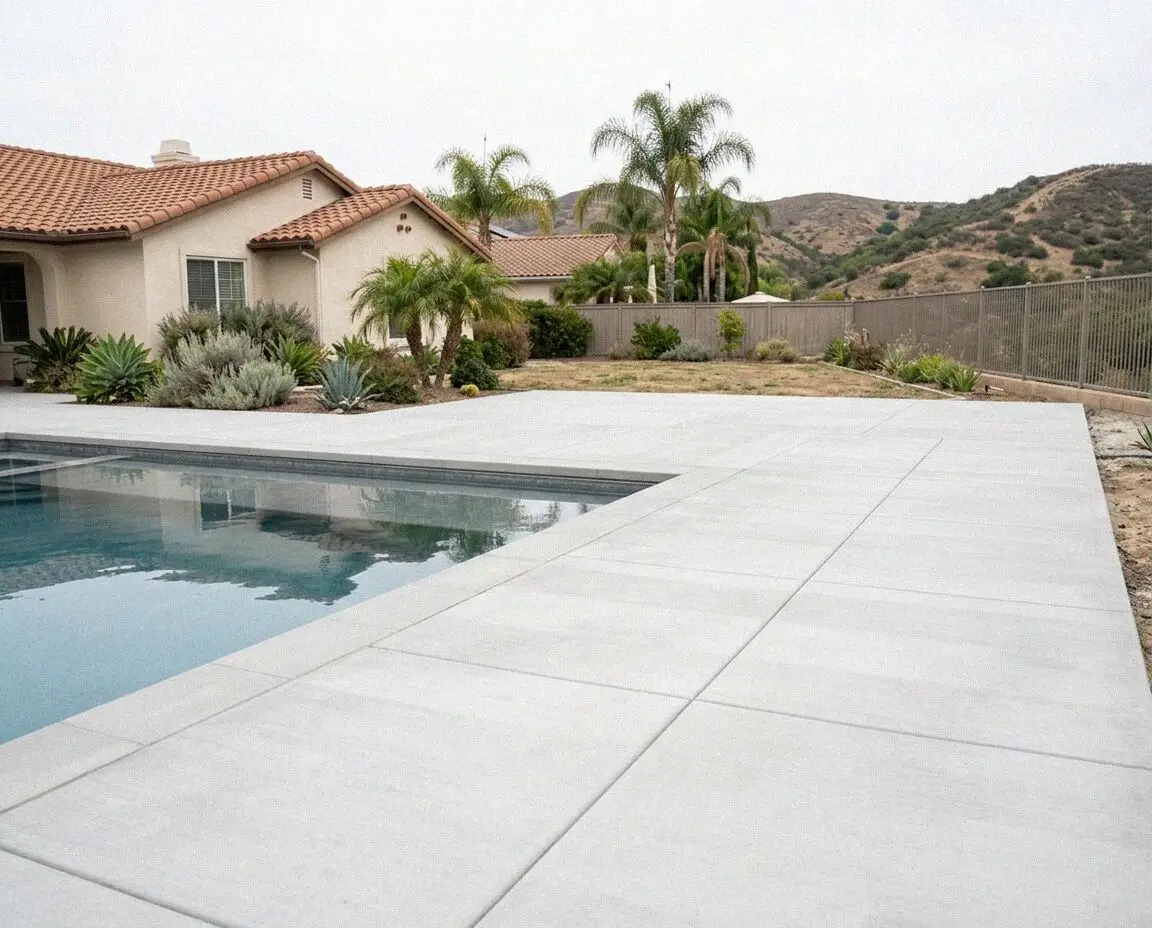
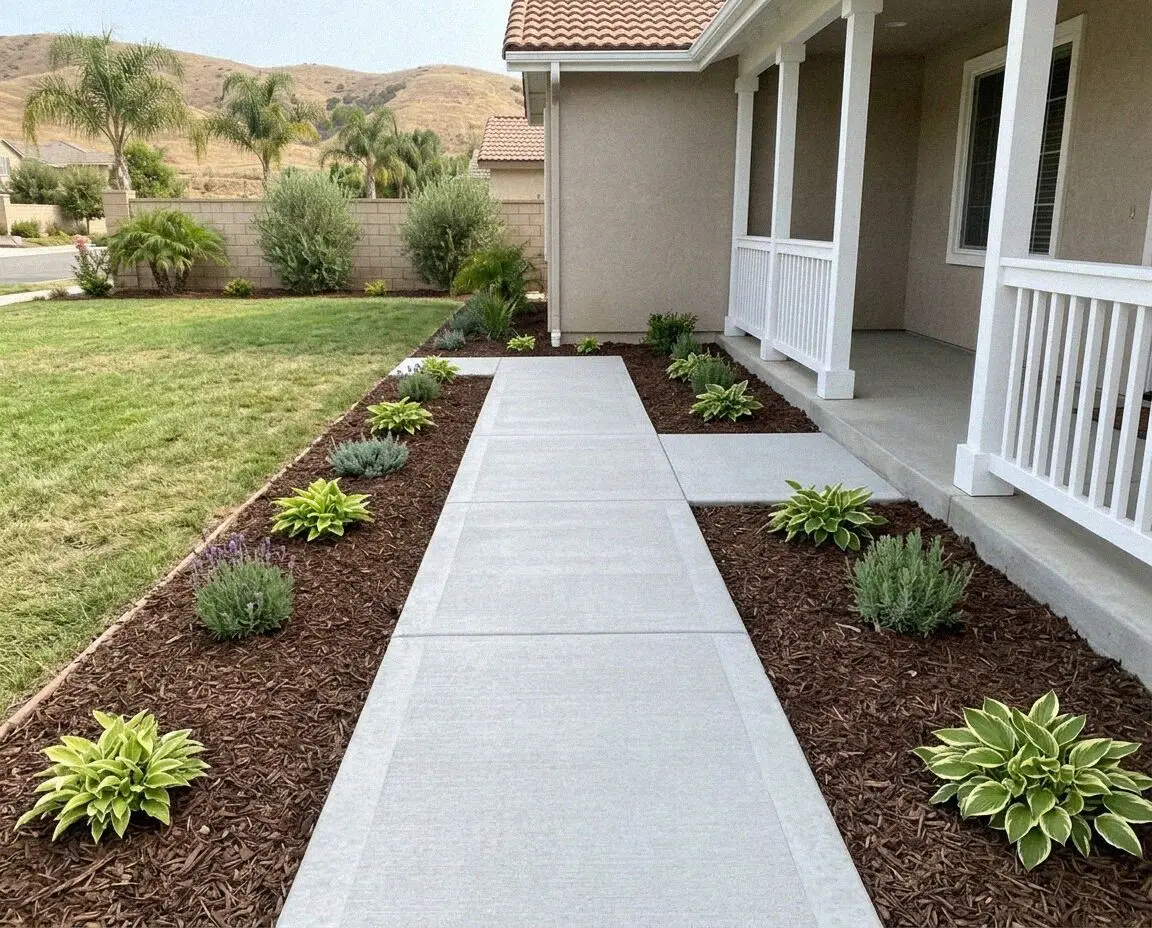
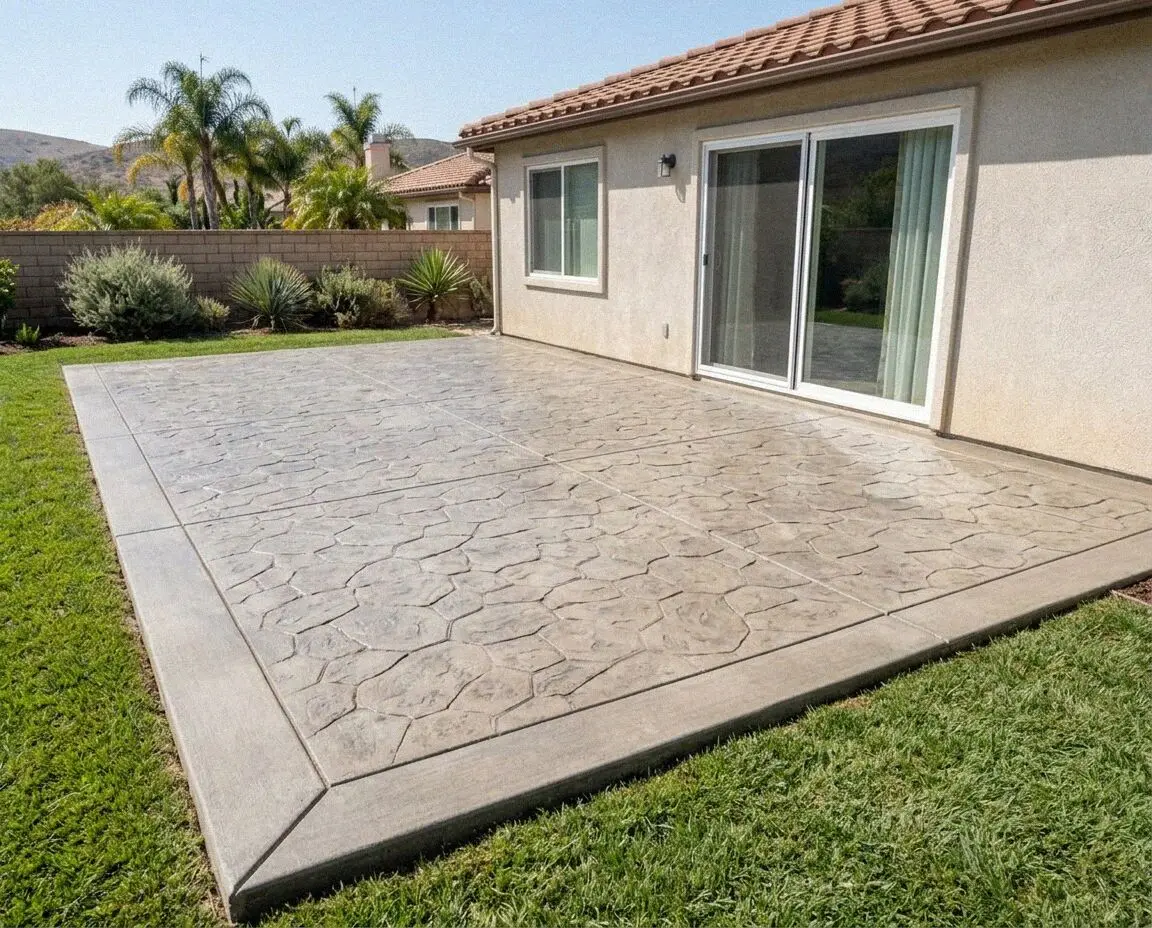
Saddleback Mission Viejo Concrete pours exposed aggregate, integral color, stamped and salt finishes on walks, drives and patios here, each written up for the association before it is formed.

Google reviewsFacebook reviewsBetter Business Bureau reviews5.0 Stars Rated by our customers · Google, Facebook and the BBB
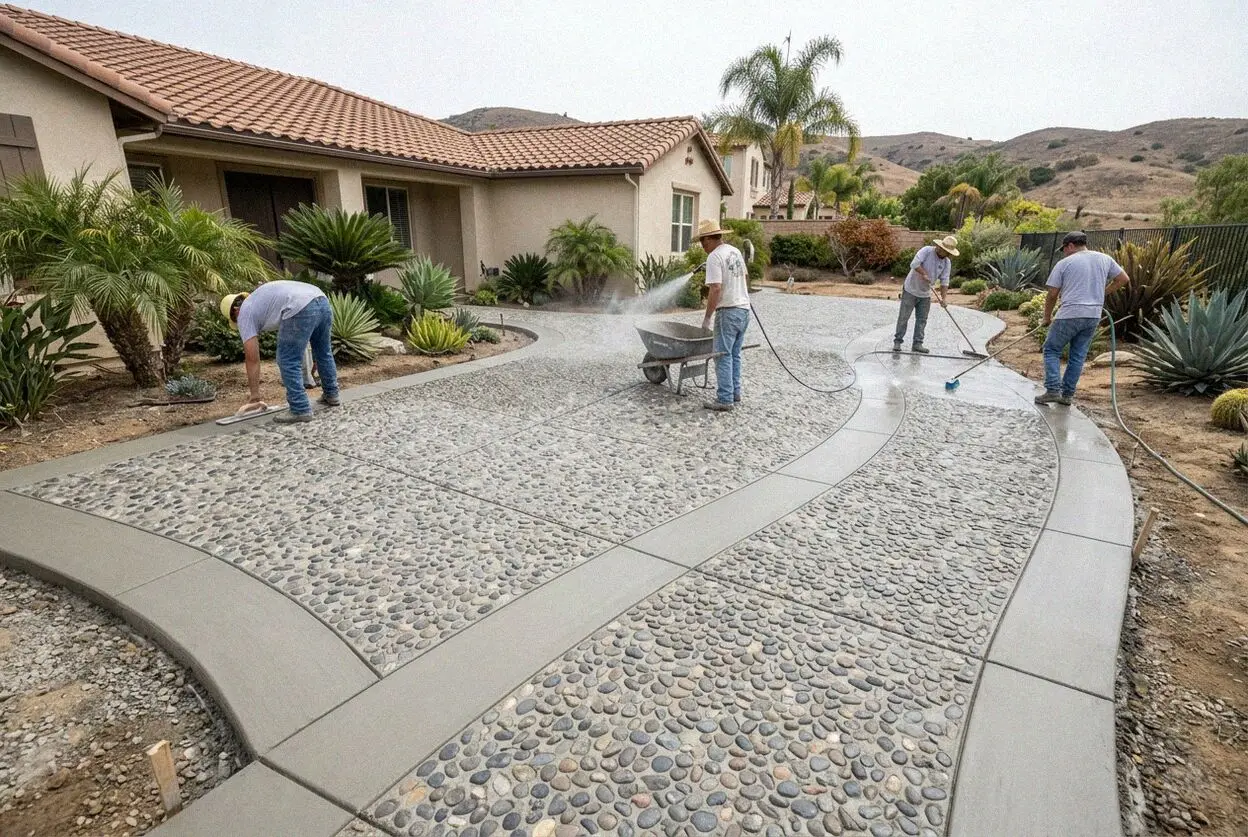
Crew washing the stone proud on a new exposed aggregate walk in Mission Viejo
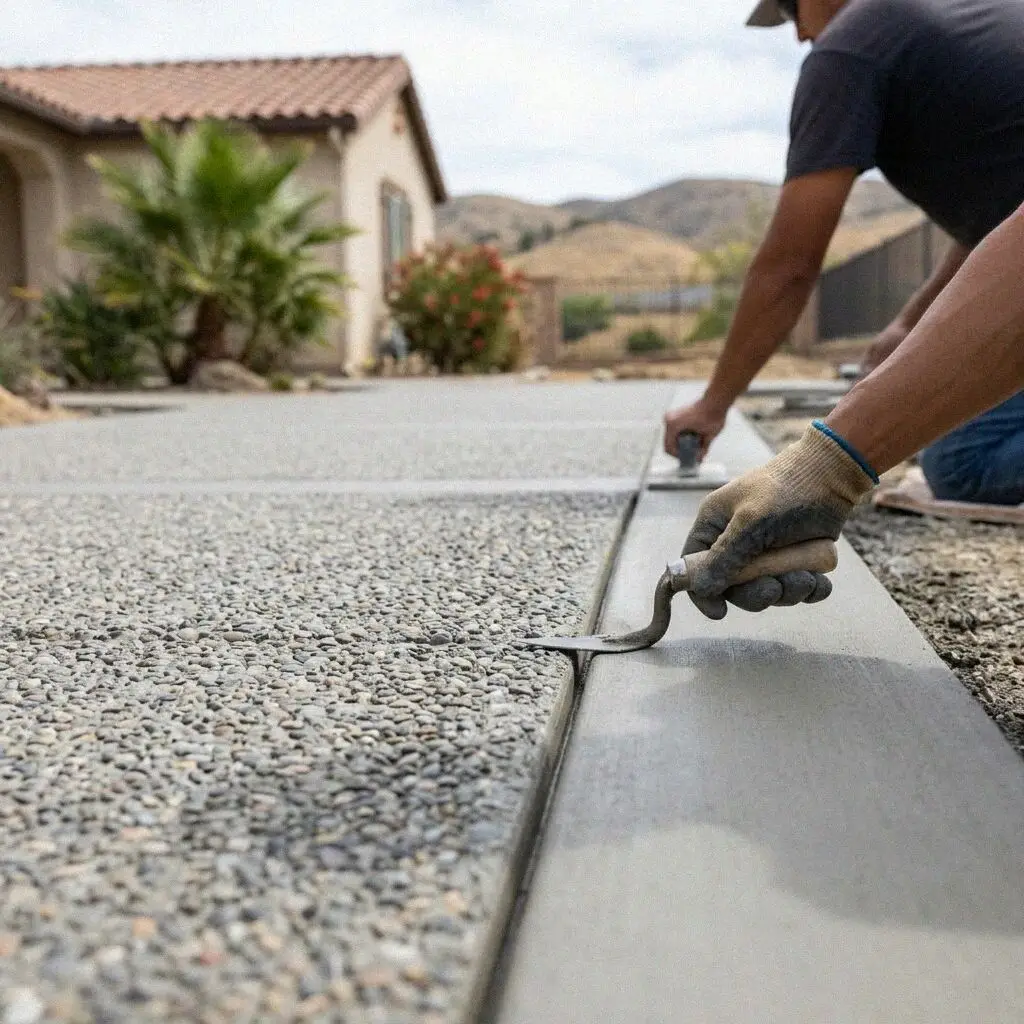
Hands seeding river stone into a fresh aggregate slab in Mission Viejo

How a finish is chosen

Decorative Concrete on a Mission Viejo Tract Lot

A decorative finish here is chosen twice before it is poured, once by you and once by the committee. Nearly every neighborhood in this city sits under an association whose architectural committee reviews anything seen from the street, and a new front walk in a color the guidelines do not list is a walk that gets broken out. So the finish, the color and the border are put on paper with the estimate and sent for approval first, and the forms go in the week the letter comes back.

Saddleback Mission Viejo Concrete was founded in Mission Viejo in 2018 by Trevor Lindqvist, after 17 years on crews across south Orange County, and he seeds, stamps and washes every decorative pour himself. The walks and pool decks the tracts came with between the mid 1960s and the 1980s were mostly exposed aggregate, river stone washed proud of a gray matrix, so a new panel beside an old one is matched stone for stone rather than poured in a look the street never had.

Every finish is poured to the California Residential Code under a CSLB C-8 license, with liability insurance on every job. A flat slab inside your lot line takes no permit from the City, so the one review a decorative walk goes through is the association's, and we write the submittal with the estimate. Color goes in the mix, not on top, because a dye dusted on fades in the sun. It carries a written workmanship guarantee against defects in how it was built.


Replace or refinish

When is decorative concrete in Mission Viejo past saving?

Stone popping out of the walk

Exposed aggregate loses its stone once the sealer has gone and the matrix around each pebble erodes. A walk shedding gravel onto the lawn was last sealed years ago, and a resealer brushed on now glues down what is left and replaces nothing. Under a third of the stone, it is repoured.

A patched panel that does not match

A repair someone poured in plain gray beside the original aggregate stands out from the curb, and a committee that sees it from the street can ask for it to be made to match. One panel repoured in the same stone and matrix color disappears into the run, and no letter is written.

Pale in the sun, dark in the shade

A stamped or colored surface that is pale where the afternoon sun hits and dark under the eaves was colored on top rather than through the mix. Resealing it evens the sheen for a season, not the color. A slab with the pigment in the mix fades the same everywhere, barely at all.

Sealer peeling in sheets

A sealer that lifts in white sheets went on over a damp slab or over a sealer it did not bond to, and water is now trapped between the two. It turns cloudy, then lets the color underneath go, and each coat over it peels sooner. The surface is stripped bare before anything goes on.

In every finish

What Goes Into Decorative Concrete in Mission Viejo

Eight things are in every decorative pour at no separate line, and each answers what this city asks of a finish: a committee that has to approve it, a tract that already has one, and a hillside sun that fades anything painted on.

Old surface out

The old walk, deck or patio is broken out and hauled the same day, however much aggregate is in it, and the base under it is checked.

The submittal written

The finish, the color and the border go on a sheet with a sample, sent to the association with the estimate so both reviews run at once.

Base packed on the probe

4 inches of gravel over probed ground, deeper where the fill side of the pad gave, because a color shows a crack a plain slab would hide.

Pigment through the mix

The color is batched into the truck at the plant, so a chip, a saw cut or ten years of sun on the front of the house leaves it the same.

Stone seeded by hand

On an exposed aggregate pour the river stone is seeded over the surface and washed proud that evening, matched to the panel beside it.

The border formed

A smooth or contrasting band is poured as its own strip with the joint at its edge, so it stays a border when the field wears.

Joints cut across the fall

Control joints are sawn the same day on a grid the pattern hides, so a shrinkage crack lands in a line rather than across a stamp.

Sealed and walked through

Sealed once cured, walked with you against the sample and the estimate, and the written guarantee handed over before we leave.

The four finishes

Decorative Finishes in Mission Viejo, Compared

Four finishes a lot here chooses between, set against where on the lot they go, where the color lives, how they feel underfoot in August and how they sit beside the aggregate the tract came with. The base and the joints are the same in all four.

OptionSuitsColor lives inUnderfoot, AugustBeside the old
Integral color broomA drive or front walk seen from the streetPigment through the whole mixWarm in a dark tan, fine in a light oneReads as new beside 1970s aggregate
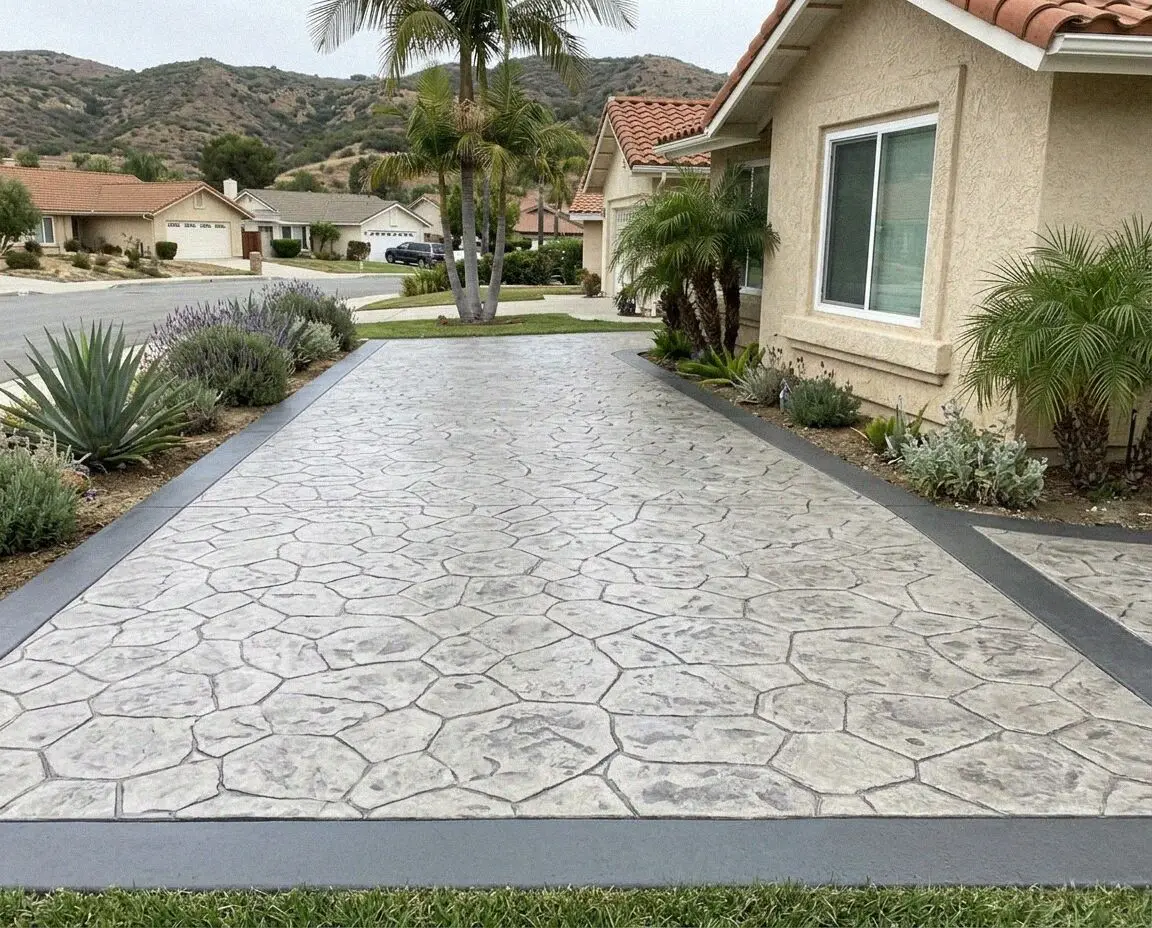
Stamped and coloredA rear patio the committee never seesIntegral base, release color on topHot in slate gray, cooler in buffA different surface, kept out back
Exposed aggregateThe walks and decks the tract came withThe stone itself, no pigment at allCool, and rough on bare feetMatches the old panels stone for stone
Salt-finish slabPool decks and shaded side patiosIntegral color, light tones onlyThe coolest of the fourClose to the original from the curb

Integral color broom is the least to lay and stamped the most; exposed aggregate and salt sit between them, and every one of the four is resealed every 2 to 3 years.

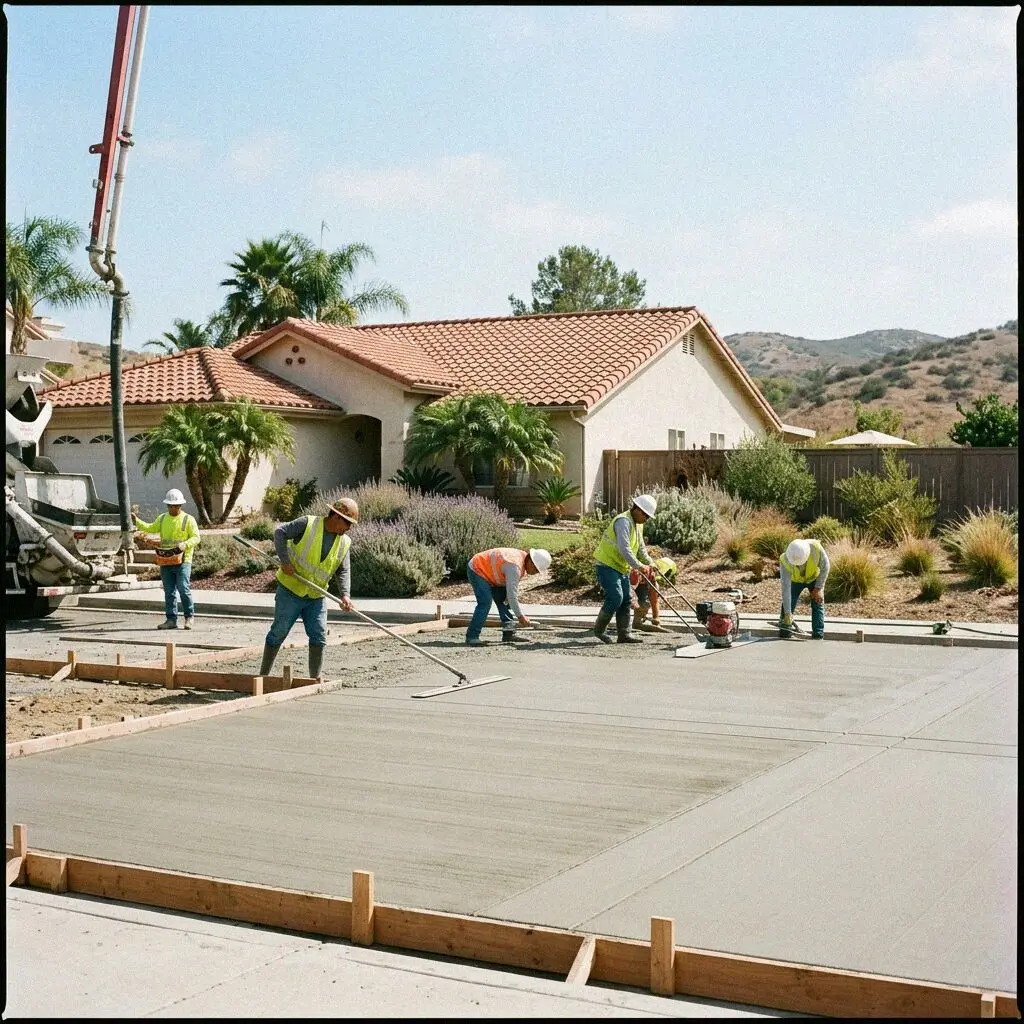
Concrete crew finishing a colored entry walk at a Mission Viejo tract home

The committee and the tract

Why a Finish Is Chosen Differently in Mission Viejo

A decorative slab here answers to two readers before it is poured, an architectural committee that reviews anything seen from the street, and a tract that already has a finish 40 to 60 years old.

The Mission Viejo Company built the city as one planned community from the mid 1960s, and most of it still sits under an association, in much of the city the Mission Viejo Environmental Association, with a committee that reviews exterior changes against written guidelines. A front walk, an entry court or a drive is an exterior change, and a color outside the earth tones the stucco and tile were built in is refused. So the finish is chosen from that palette, and the letter comes first.

The second reader is the tract itself. The original walks and pool decks in Deane Homes, Aegean Hills and Castille were poured in exposed aggregate, and forty years on the neighbor's panels are still that finish, so a new panel is matched to them in stone size and matrix color rather than poured in a look the street has never had. Behind the house the rules loosen, and a stamped patio or a salt-finish pool deck can take the color you want, on the pad probed for fill first.

From sample to seal

How We Pour Decorative Concrete in Mission Viejo

Five stages, the same crew at each, and the person who chooses the stone with you at the estimate is the one washing it proud on the evening of the pour. The association's letter comes before the forms.

1

Measure, probe and lay samples

Trevor Lindqvist measures the slab, probes the pad and lays samples against the house and the walk next door, then writes the estimate on the spot.

2

Submit, approve and book

The finish and the color go to the association with the estimate, and a pour date is set for the week the approval letter arrives.

3

Break out and check the base

The old surface is hauled off and the ground under it probed, with the fill side dug out and packed where it has settled since the tract went in.

4

Pour, seed, stamp or salt

The colored mix goes down before 8 AM in a Santa Ana week, then the stone is seeded and washed, the stamp laid or the salt pressed, and joints cut.

5

Cure, seal and walk through

Kept damp seven days, sealed once dry, and walked with you against the sample so what was approved is what was poured.

Behind the number

What Sets the Estimate on Decorative Concrete Here

The finish starts the figure and the lot finishes it. Two patios of the same size can be a day apart once one wants a stamped border on a pad that has settled, so nothing is quoted from a color chart. Every estimate is measured and written on site.

A front walk and entry

The standard job on a tract lot, and what moves it is whether the finish has to match the aggregate next door and how many panels the street sees.

A condominium courtyard

The association is the client, so the estimate is written to its guidelines first, and the courtyard is poured in halves to keep a path open.

A pool deck wrapping the lot

A deck turning two corners on a hillside pad is probed for fill at each corner and the joint at the coping, and the finish is the last of it.

Two colors and a border

A stamped field in one color with a contrasting band is two mixes, two pours and a second day of finishing, so each is itemized on its own line.

The visit, the samples and the written figure cost nothing, and the call that books a time for it comes within 1 business day. (657) 390-1824 or send us a message.

Ready to have a Mission Viejo finish sampled at home?

Send the form or call, and someone rings back within 1 business day to fix a time. Trevor Lindqvist lays the samples against your house, probes the pad and writes the figure and the submittal at your property, and you can sleep on both.

Request a Free Estimate

Written on site · No obligation

By submitting, you agree to our disclosure and consent terms, including being contacted by Saddleback Mission Viejo Concrete.

Finishes we poured

Three Mission Viejo Finishes, in Their Owners' Words

Three reviews left on Google, Facebook and the BBB, each about a decorative finish rather than a plain slab, and each naming the finish and whether the committee had a say in it.

Google review

“Our front walk in Deane Homes was the original aggregate and half the stone had gone. Trevor matched the pebble size and the gray of the old panels, wrote up the submittal for the association and had the approval back in three weeks. You cannot tell the new run from the neighbor's.”

Patricia H. of Deane HomesExposed aggregate walk to match · Google · 2023
Facebook review

“We wanted a stamped patio out back in Canyon Crest and a neighbor said it would never pass. It did not need to, since nothing shows from the street. They poured 360 square feet in a buff Ashlar slate with a smooth border, sealed it at four weeks and it has stayed one color for two summers.”

Daniel K. of Canyon CrestStamped patio with a border · Facebook · 2024
BBB review

“The pool deck at our place in Mallorca had been colored on top and was two shades by the time we called. They stripped the old sealer, broke out the worst panels and poured a salt finish with the color in the mix. It is cool enough to walk on barefoot in August and matches in sun and shade.”

Susan M. of MallorcaSalt-finish pool deck · BBB · 2025

Before you book

Decorative Concrete Questions Asked in Mission Viejo

What moves the figure on a finish, how long the approval takes, which colors pass, what the sealer covers and what is guaranteed once the stone is washed, answered for a lot here.

(657) 390-1824
  • What makes one decorative estimate larger than another?

    The finish, more than the square footage. Exposed aggregate is seeded and washed by hand on the evening of the pour, a stamp needs a second color and a second day of finishing, and a border is its own pour in its own forms. After that it is whether the old surface has to come out and what the pad has done since the tract went in, as a colored slab shows a crack a plain one hides. All of it is measured on site.

  • How long does the association take to approve a finish?

    Two to six weeks in most of the city, and the crew is booked for the week after the letter. The submittal goes in with the estimate, so the review runs while you decide rather than after, and it names the finish, the color and the border with a sample. Once approved, the pour itself is one morning, the joints are cut that afternoon, feet go on after 24 to 48 hours, and a drive takes cars at 7 days.

  • Does the estimate cover matching the old aggregate?

    Yes. Sourcing a river stone in the size and color of the panels next door, seeding it by hand and washing it proud is written into the figure, and so is breaking out and hauling the old surface. What sits outside the figure is named at the visit rather than added later, such as a sample the committee asks to see poured, or a base dug deeper than the probe showed. The number you sign is the one on the bill.

  • Which colors will the architectural committee approve?

    The earth tones the tract was built in, and the guidelines say which. Most associations here list tans, buffs and grays for anything seen from the street and refuse reds, blues and blacks, while exposed aggregate in a natural stone passes almost everywhere because it is what the walks already are. Behind the house the rules loosen, and a stamped patio can take a slate or a terracotta. We read the guidelines first.

  • Will homeowners insurance pay for a faded surface?

    No. Fading, a sealer lifting and stone shedding from an old walk are wear, and a policy treats wear as maintenance rather than a loss, so a surface that has gone two shades in the sun is the owner's to redo. The exception is sudden damage from a covered event, a vehicle across the walk or a burst line washing the base out from under it. Photograph the surface before anything is stripped, and ask your carrier.

  • What is guaranteed on a decorative finish?

    How it was built: the base, the thickness, the color batched into the mix, the stone seeded, the pattern laid and the joints cut, with those terms printed on the estimate before you sign. It is a written workmanship guarantee against defects in how it was built. A sealer fading, stains, a sealer someone else applies and ground moving beyond what the joints control sit outside it. A fault in the build, we fix.

  • What stone, pigment and sealer go into the finish?

    A 3,500 psi ready-mix with the pigment batched at the plant, a washed river pebble seeded by hand for exposed aggregate, a powder release and a rubber stamp mat for a stamped field, and a solvent-based acrylic sealer once the slab is dry. Each is named on the estimate with the color number, so the truck and the tins can be checked against what the committee approved and what you agreed to.

  • Do I have to be home while the finish is poured?

    Only to pick the sample at the start and to walk the slab against it at the end. In between the crew needs water, an unlocked side gate and the walk or drive closed for the day of the pour and the evening after it, when the stone is washed. Keep the sprinklers off the slab for a week, because hard water landing on a fresh colored surface leaves a mark the sealer then locks in.

Towns we pour in

Decorative Concrete Around Mission Viejo

The eight nearest towns on the list, with the straight-line distance from the office on La Paz Road beside each. Every finish is sampled at the house before a figure is written.

Show All Areas We Serve

Book a free sample visit for a Mission Viejo finish

Call or send the form and you hear back within 1 business day. Say whether the slab is seen from the street and what finish is there now, and the visit can be booked for a day inside the same week, samples in the truck.