Serving Mission Viejo, CA and surrounding areas.(657) 390-1824
Saddleback Mission Viejo Concrete

Concrete Cutting in Mission Viejo, CA for the Drain Line That Takes Water Off the Pad

Saddleback Mission Viejo Concrete saws the trench through the walk, the patio and the apron on the fall the pipe needs, and pours it closed flush. Every estimate is measured and written on site.

Google reviewsFacebook reviewsBetter Business Bureau reviews5.0 Stars Rated by our customers · Google, Facebook and the BBB
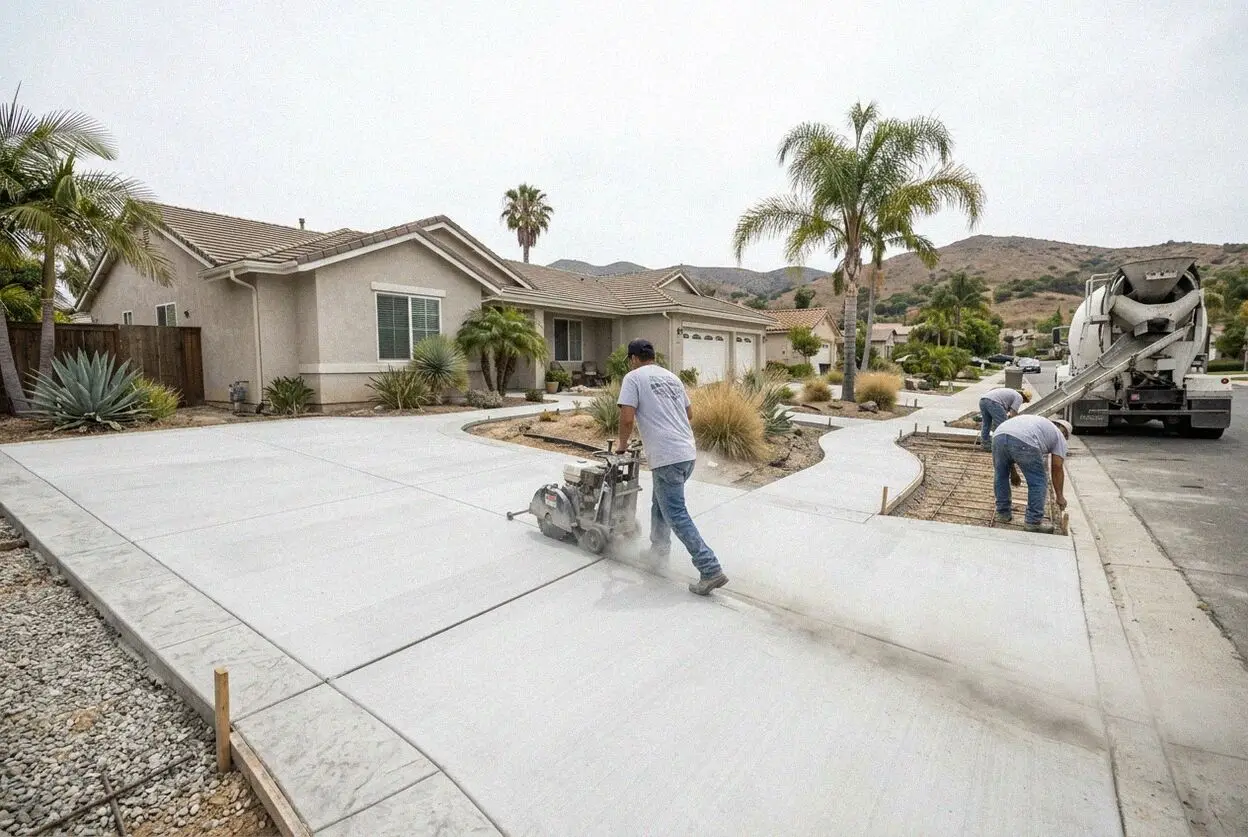
Walk-behind saw cutting a trench line across a side yard walk in Mission Viejo
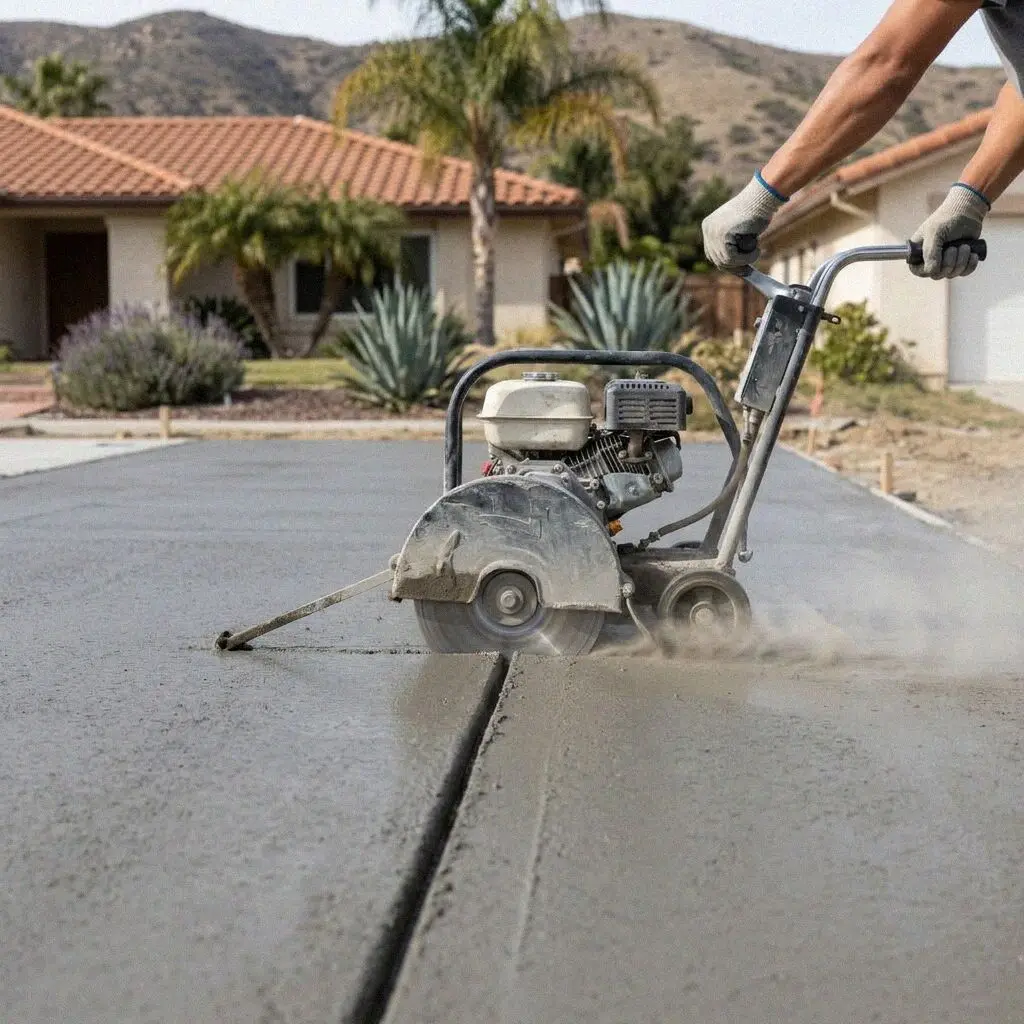
Diamond blade cutting wet through a concrete patio in Mission Viejo

How a cut is made here

Cutting a Drain Trench Through a Mission Viejo Yard

Water on a hillside pad has to reach the street, and the only way there is through concrete. A rear yard that ends in a slope cannot drain over the crest without softening the fill the house sits on, so the water goes into an area drain and down a pipe along the side yard to the curb. On the way that pipe crosses the side walk, often the patio, and always the driveway apron. Each one is sawn on the line the pipe's fall sets, opened, trenched and poured back flush.

Saddleback Mission Viejo Concrete cuts on the 1960s and 1970s pads of Aegean Hills, Cordova and Casta del Sol, where 40 to 60 years of patios and planters have turned the yard's fall back toward the house, and on the post-tensioned slabs of Pacific Hills and Painted Trails, which are scanned for cables before a blade touches them. Trevor Lindqvist traces the water from the back wall to the curb himself and crayons every cut, after 17 years on pads across south Orange County.

A trench on your own lot needs no permit, but the pipe's last foot through the curb face does, an encroachment permit from the City of Mission Viejo, and your association sees any walk on the street side. We file both. The license is CSLB C-8, held with the California Contractors State License Board, and we carry liability insurance on every job. The closed trench carries a written workmanship guarantee against defects in how it was built.


Water with nowhere to go

Does My Mission Viejo Yard Need a Drain Cut Through It?

Water standing at the back wall

A puddle against the rear wall the morning after rain is the first sign. The pad was graded to fall to the street, and a patio, a planter or a lawn built up over decades has reversed it, so the water runs to the house and sits. It soaks the fill under the footing.

A side walk green for weeks

Algae on the side walk after a storm means the walk was poured flat, or has settled flat, and the water that reaches it stays. The side yard is the only route from the back of the house to the street, so water stopping there is not getting out. It is the first slab the line meets.

A drain that ends at the slope

An area drain in the lawn that overflows in the first hour of rain is usually piped to the top of the slope and nowhere else. It empties the yard onto the fill below the crest, and a slope face wet for a week slumps. The pipe has to be turned and run to the street through the slabs.

The slope face wet or slumping

A rear slope with a damp band across it in May, or a lip of soil that has slid a few inches below the crest, is water from the yard getting into the fill. The house bears on that fill. This is the sign to book the trench this month, before the drop reaches the back wall.

In every trench

What a Mission Viejo Concrete Cut Includes

Every trench carries these eight, and each answers something a hillside yard does. Water that has to fall the whole way to the curb, slabs that may carry stressed cables, and a gutter that runs straight to Oso Creek.

The line set to the fall

The trench is marked from the drain to the curb with the pipe's own gradient shot in, so the line runs where the water will, not where it is easy.

Scan before the blade

Any slab poured after 1980 is scanned for post-tension cables and pipes, and the trench moved to run between them rather than across them.

Sawn wet, both edges

Both sides of the trench are cut with a diamond blade under water to full depth, so the concrete that stays keeps a straight, uncracked edge.

Slurry vacuumed off

The cutting water is drawn off the slab as it is made and taken away, so none of it runs down the driveway into the gutter and the creek.

Panel out inside the cuts

The strip is broken out between the cuts and hauled the same day, never hammered beyond the saw line where the old slab would spall.

Trench dug to grade

The ground under the opened strip is dug to the gradient the pipe needs, bedded in sand, and checked with a level before the pipe is laid in it.

Poured back flush

The strip is doweled to the old edges and poured back level with them, the surface matched to the broom or salt finish either side.

Water test and guarantee

A hose is run into the area drain and watched out of the curb before we leave, and the written guarantee for the cut and the pour is handed over.

Ways to open concrete

Concrete Cutting Methods Used in Mission Viejo, Compared

Four ways to open a slab for a drain line, set against where each one works, how deep it cuts, the edge it leaves for the pour back, and the water it needs. The pipe underneath is the same in all four, so the table is about the cut.

OptionWhere it worksDepth of cutEdge it leavesWater it needs
Walk-behind wet sawDriveways, patios, any open run4 to 7 inches, set by the bladeStraight and square, pour-back readyA hose and a slurry vacuum
Hand-held cut-off sawSide yards under 40 inches wideUp to 5 inches in two passesStraight, a shade less squareA hose, slurry caught by hand
Diamond core drillCurb faces, footings, stem wallsThrough the whole thicknessA round hole, 3 to 6 inches acrossFed through the bit
Breaker on a saw lineA slab coming out wholeThe full slab, in piecesRagged, unless a saw cut leads itNone, dust wetted down

The walk-behind saw costs least per foot where there is room to run it, the hand saw least where there is none, and coring costs most but goes clean through a curb.

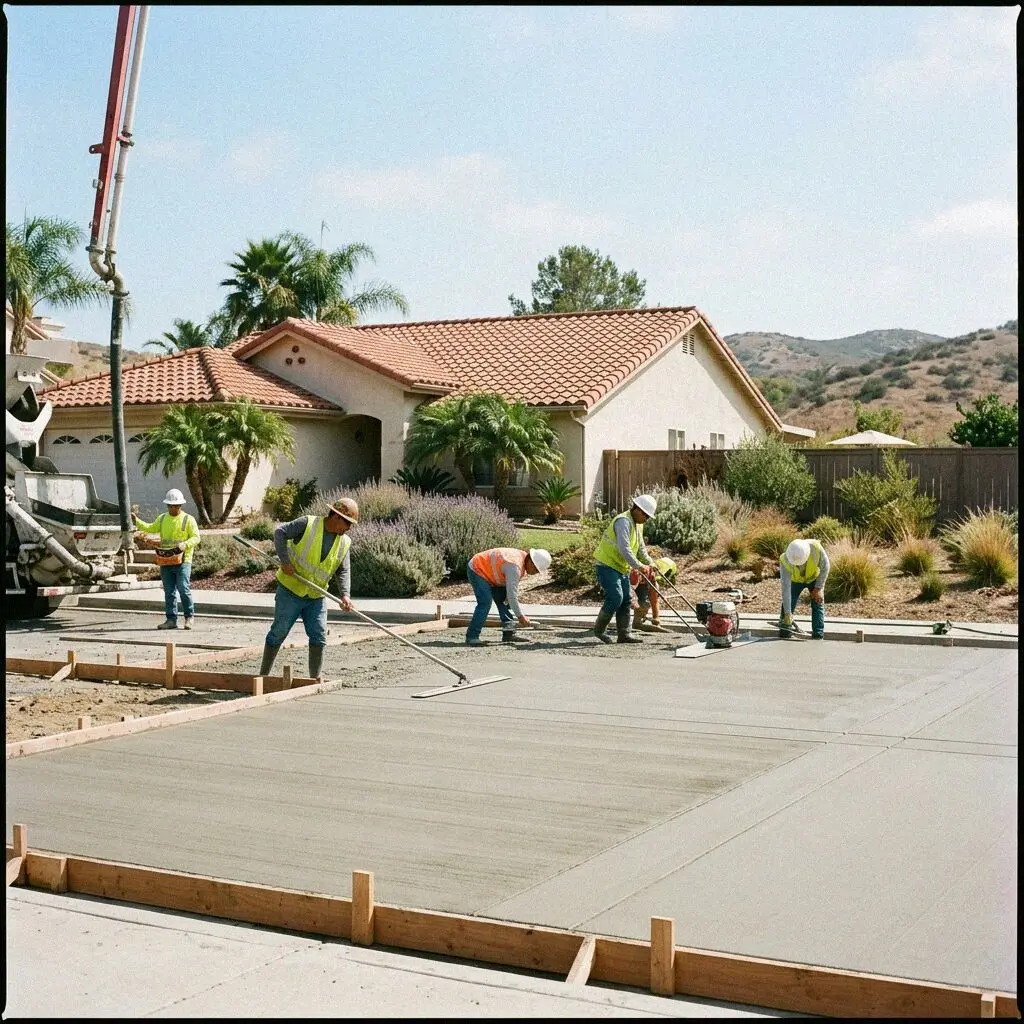
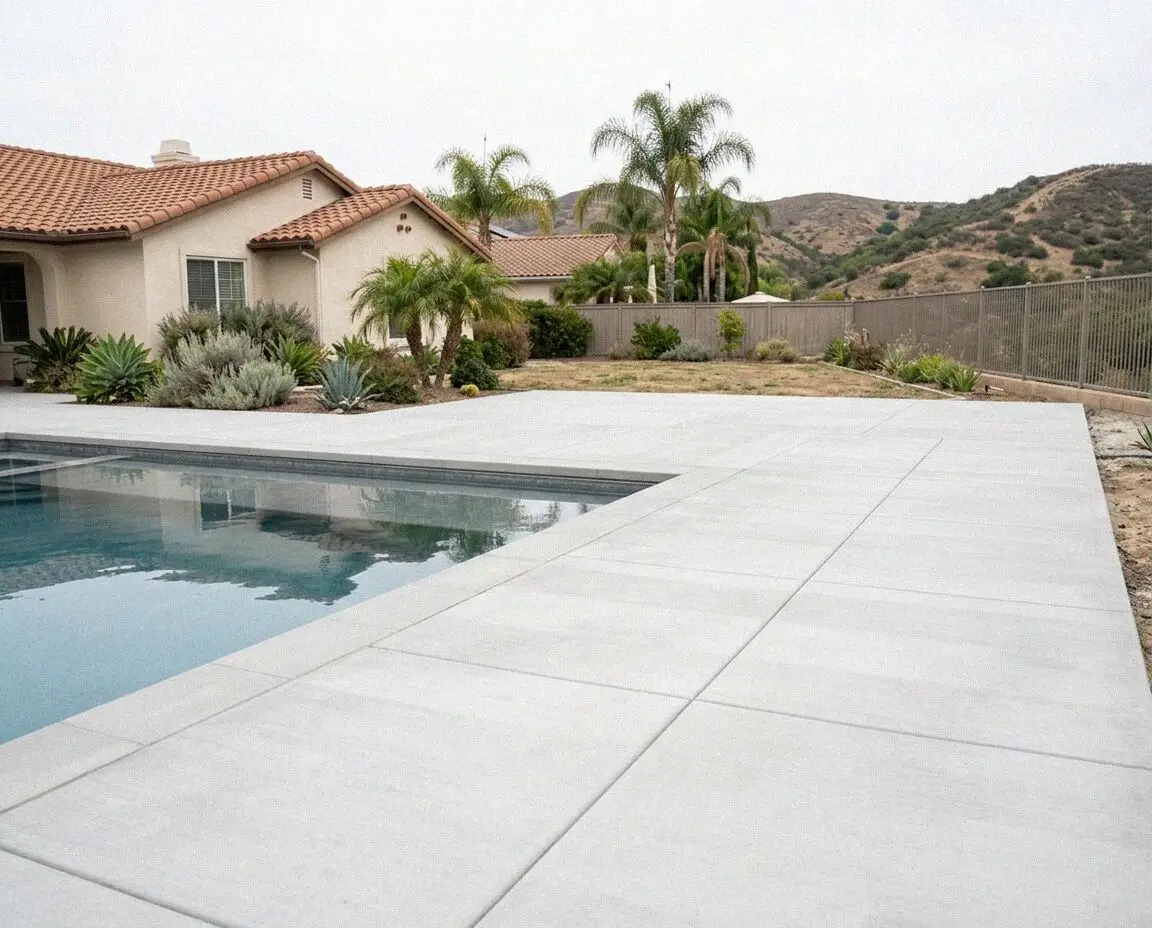
Crew finishing a concrete pool deck at the back of a Mission Viejo home

The pad and the street

Why Drain Lines in Mission Viejo Run Through Concrete

Every yard in Mission Viejo ends at a slope or a wall, and its water has to reach the street, so almost every drain line here crosses concrete poured 40 to 60 years before anyone thought of it.

The pads were graded in the 1960s and 1970s to fall from the back of the lot to the street, and for the first owner they did. Then came the patio, the pool deck, the planter on the fence line and the lawn built up over it, and by the third owner the yard falls toward the house or the crest. Water at the crest goes into the fill the pad was made of, which is why the manufactured slopes carry terrace drains. Either way the fix is a drain piped to the curb.

That pipe crosses the side yard walk, on most lots the driveway, and its last foot goes through the curb face, which is the City's. Pacific Hills and Painted Trails were built on post-tensioned slabs, and a patio poured against one can hide the ends of the cables, so every slab there is scanned first. The cut is wet, and on a driveway that pitches to the street the slurry runs to the gutter and on to Oso Creek unless it is drawn off. The driveway apron goes back on its fall.

From walk to water test

How We Cut a Drain Line in Mission Viejo

Five stages, and the person who traces the water at the first is the one running the saw at the fourth. Any slab poured after 1980 is scanned between the marking and the cut, and no blade goes in until the scan is on the concrete.

1

Trace the water, mark the line

Trevor Lindqvist traces the water from the back wall to the curb, shoots the fall the pipe needs, crayons each slab. The figure is written there.

2

Permit and association

The curb core is filed with the City for an encroachment permit and the walk shown to your association, both before a start date is fixed.

3

Scan the slab, locate the lines

Post-tensioned slabs are scanned for cables, DigAlert marks the utilities in the parkway, and the line is moved where either one crosses it.

4

Saw, break out, trench

Both edges are cut wet with the slurry vacuumed, the strip is broken out and hauled, and the trench under it dug and bedded to the fall.

5

Pipe in, pour back, test

The pipe is laid and checked, the strip doweled and poured back flush, and a hose run into the drain until water shows at the curb.

Behind the number

What Sets the Estimate on a Mission Viejo Concrete Cut

The length of the run sets the figure and what the run crosses finishes it. A drain line from a back corner to the curb on a lot here is 80 to 140 feet, and the slabs on that line are what matter. Every estimate is measured and written on site.

A one-story tract home

How many slabs the line crosses, the side walk, the patio and the apron, each a cut, a break-out and a pour back on the estimate.

A condominium or townhome

The walk outside your patio gate is the association's, so its review sits on the schedule and its finish has to be matched exactly.

A pool between house and slope

A pool deck is cut around the coping and the pipe run beside the shell, which adds length, a second scan and a deck poured back to match.

Stamped or exposed aggregate

A decorative surface cannot be patched to match, so the strip goes back as a full panel on the nearest joints, and that panel is measured.

Marking the line and writing the figure cost nothing, and the call to book the visit comes within 1 business day. (657) 390-1824 or send us a message.

Ready to have your Mission Viejo drain line marked?

Call or send the form, and the call back comes within 1 business day with a day for the visit. Trevor Lindqvist traces the water, crayons the line on every slab and writes the figure at your house, with no obligation past that.

Request a Free Estimate

Written on site · No obligation

By submitting, you agree to our disclosure and consent terms, including being contacted by Saddleback Mission Viejo Concrete.

Trenches we cut

Three Mission Viejo Cuts, in Their Owners' Words

Left on Google, Facebook and the BBB by owners whose yards we trenched, each naming the length of the run or the slabs the line crossed, and none about a new pour.

Google review

“Our Cordova yard flooded to the slider every winter. They cut a trench across the side walk and the driveway, 110 feet of it, ran the pipe to the curb and poured the concrete back so flush you cannot find the line. First storm, the water came out of the curb and the patio stayed dry.”

Brenda F. of CordovaDrain trench to the curb · Google · 2024
Facebook review

“The patio in Painted Trails is poured against a post-tensioned slab and I was nervous about anyone cutting near it. Trevor scanned it, drew the cables on the concrete in crayon and set the cut a foot clear of the nearest one. The trench was open, piped and closed in two days.”

Nate O. of Painted TrailsCut beside a post-tensioned slab · Facebook · 2026
BBB review

“Our Pacific Hills lawn drain emptied onto the slope and the slope had started to slump. They cut through the side yard and the apron, cored the curb, and turned the whole system to the street. They vacuumed every drop of slurry off the driveway, which the neighbor's crew had not.”

Marta V. of Pacific HillsSlope drain rerouted to the curb · BBB · 2021

Before you book

Concrete Cutting Questions Asked in Mission Viejo

What moves the figure, how many days the driveway is open, which cut the City permits, whether insurance pays, and what is guaranteed once the trench is poured back, answered for a yard here.

(657) 390-1824
  • What sets the cost of a drain trench cut in Mission Viejo?

    The length of the run and how many slabs it crosses. A line from the back corner to the curb on a lot here is 80 to 140 feet, and every slab on it, the side walk, the patio, the apron, is its own cut, break-out and pour back. After that it is the surface. A broom finish is patched to match and a stamped one goes back as a whole panel. All of it is marked on the concrete at the visit and written down.

  • How long is a driveway out of use for a trench cut?

    Two to three days, then a week for the concrete. The side walk and the patio are cut and opened on the first day, the apron on the second so the car has the street, the pipe goes in as each strip opens, and the pour back is the second or third day. Feet go on the new strip after 24 to 48 hours and a car after 7 days. The yard drain works from the day the pipe is in, before the concrete is back.

  • Is pouring the concrete back part of the estimate?

    Yes. Sawing, breaking out, hauling, the trench, the sand bed, and the strip doweled and poured back flush with the finish matched are one figure, and so are the scan and the curb core. The pipe is laid by us or by your landscaper, and the estimate says which. What sits outside it is named at the visit rather than added later, a root mass under the walk or an irrigation main in the line.

  • Do I need a permit to cut concrete in Mission Viejo?

    Not on your own lot. A trench through your walk, patio or driveway is exempt under the California Residential Code. The curb is the City's, so the core through its face for the pipe outlet takes an encroachment permit from the City of Mission Viejo, and the sidewalk if the line crosses one. A walk seen from the street is shown to your association. We file both and the schedule allows for their review.

  • Will homeowners insurance pay to reroute yard drainage?

    Not as a rule. Surface water, seepage and a yard that has settled the wrong way are treated as maintenance by the policies written here, so a drain line to the curb is the owner's to pay for. The exception is a sudden covered event, a supply line bursting under the walk and washing out the base, which can carry the cut and the pour back with it. Photograph the standing water and ask your carrier first.

  • What is guaranteed once the trench is poured back?

    How it was cut and closed. Straight sawn edges, the strip doweled to them, the depth poured, the finish matched and the fall the trench was dug to, as written on the estimate, all under a written workmanship guarantee against defects in how it was built. The pipe is guaranteed by whoever laid it, us where we did. Tree roots, a later planter or fill settling under the walk sit outside it. A fault of ours, we fix.

  • What blade and what concrete go into the cut?

    A diamond blade run wet on a walk-behind saw, or a hand-held saw where the side yard is too narrow for one, with a vacuum on the slurry as it forms. The strip goes back in a 3,500 psi mix on number 4 dowels drilled into the old edges every 18 inches, over the trench backfilled and compacted in layers, and the pipe under it is bedded in sand. The mix and the dowel spacing are named on the estimate.

  • Do I have to be home while the concrete is cut?

    For the visit at the start and the water test at the end, when a hose runs into the drain and you watch it come out of the curb. In between the crew needs the side gate open, a hose bib, and the car off the driveway on the day the apron is cut. Sawing is loud for a few hours and runs inside the City's working hours, and the vacuum keeps the slurry off the street, so the neighbors see a wet line and no more.

Towns we cut in

Concrete Cutting Around Mission Viejo

The nearest eight towns on the coverage list and how far each sits from La Paz Road. A drain line in any of them is marked on the concrete before the figure is written.

Show All Areas We Serve

Book a free visit to mark your Mission Viejo drain line

The form or a call is answered within 1 business day. Tell us where the water stands and whether the yard ends in a slope, and the visit goes on the calendar inside the same week, with the figure written before we leave.