Serving Mission Viejo, CA and surrounding areas.(657) 390-1824
Saddleback Mission Viejo Concrete

Concrete Patio Construction in Mission Viejo, CA That Drains the Way the Pad Does

Saddleback Mission Viejo Concrete pours rear-yard patios that drain to the box the pad was graded for, under the stucco screed and short of the slope. Every estimate is measured and written on site.

Google reviewsFacebook reviewsBetter Business Bureau reviews5.0 Stars Rated by our customers · Google, Facebook and the BBB
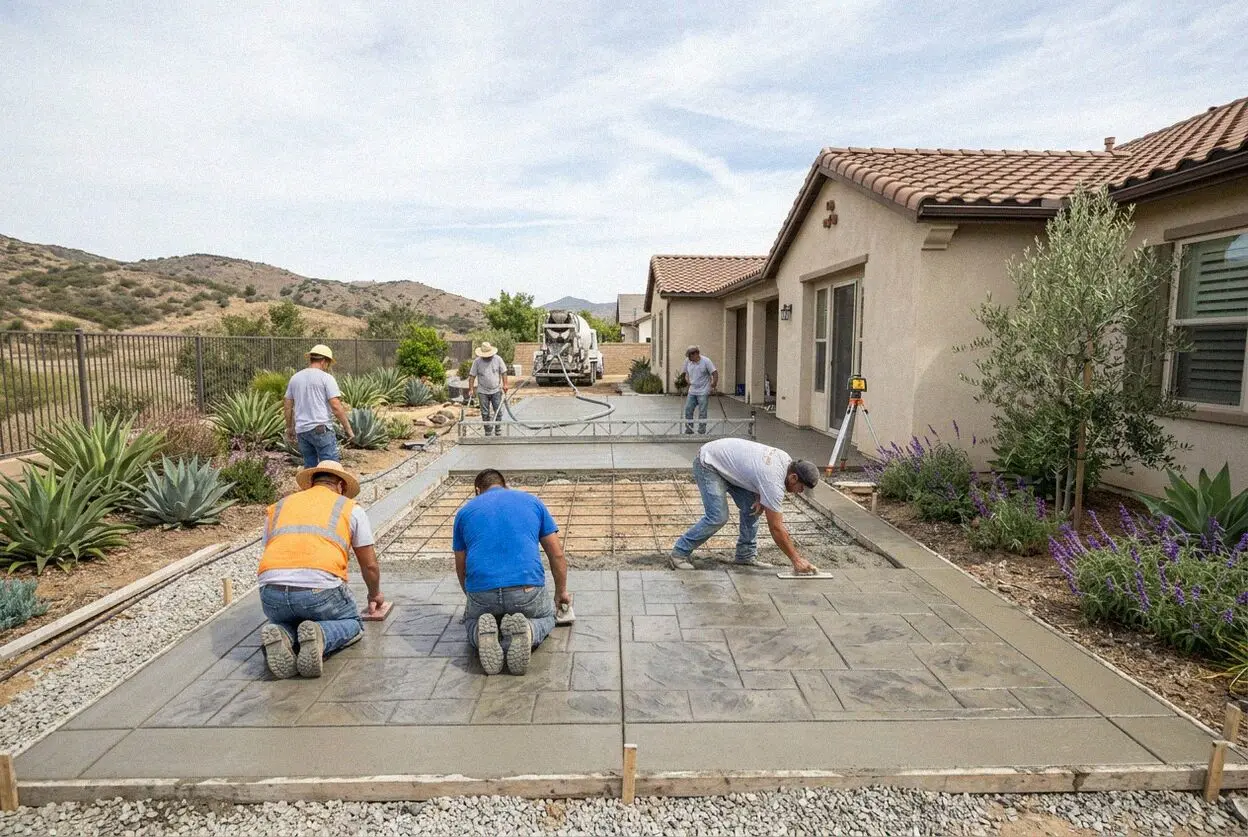
Crew placing concrete for a rear patio behind a Mission Viejo home
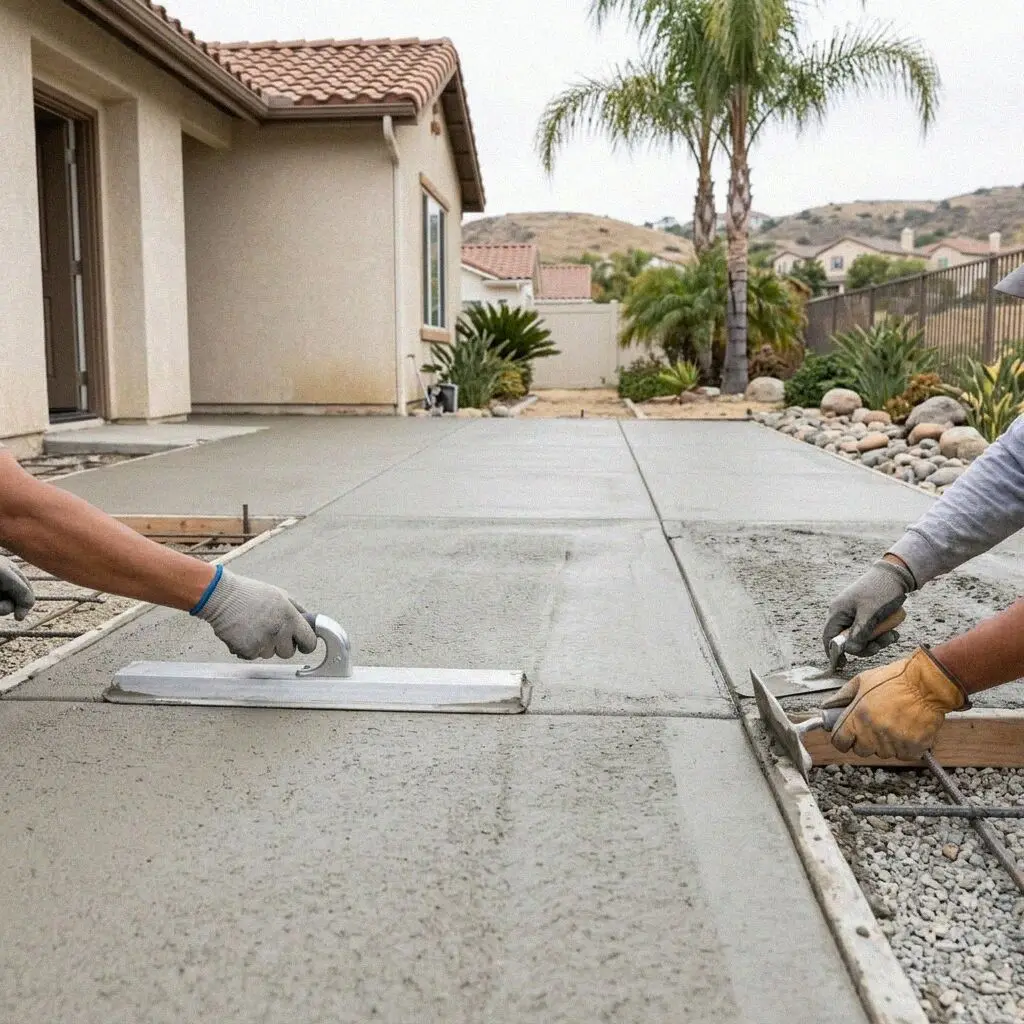
Hands floating the edge of a fresh patio slab at a Mission Viejo home

Water first

Pouring a Patio on a Mission Viejo Rear Yard

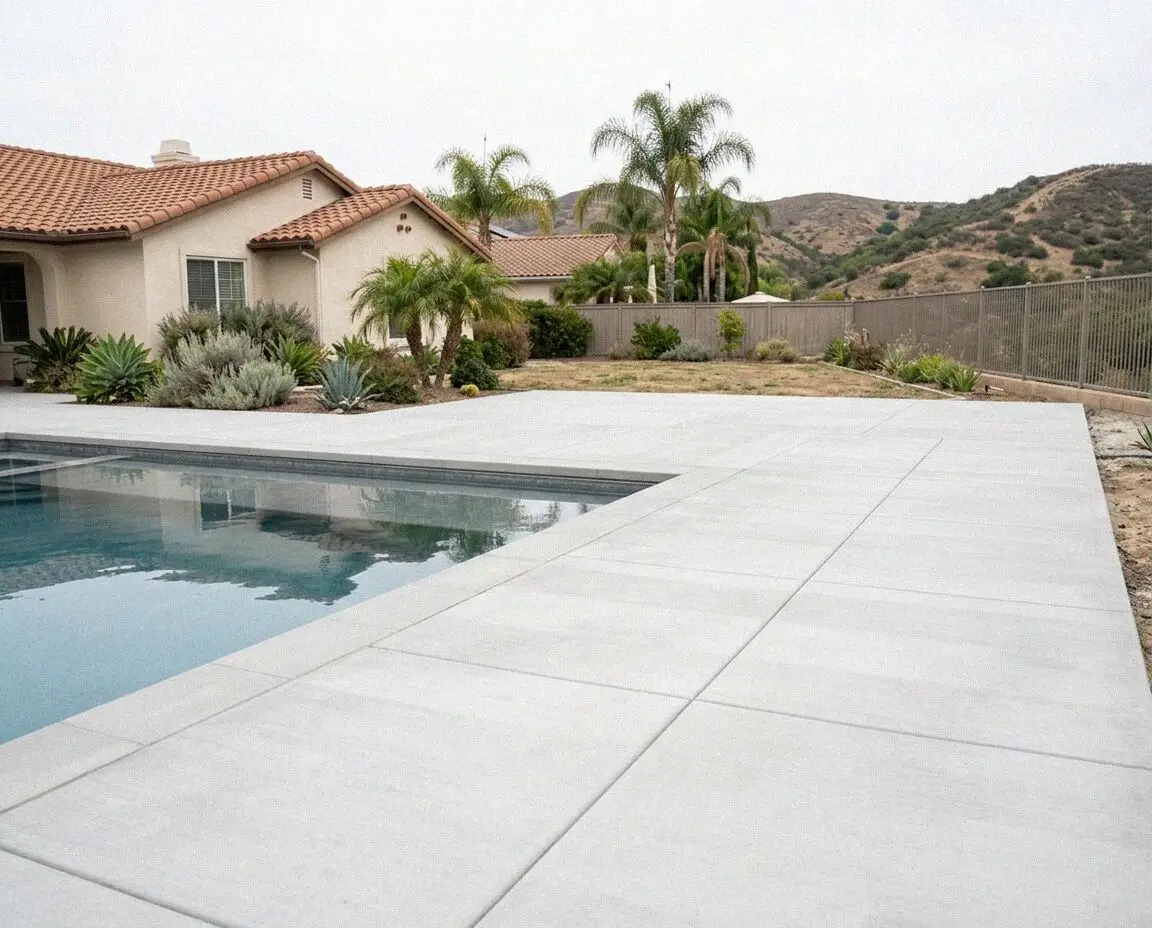
A rear yard in Mission Viejo was shaped by the grader before the house went up, with the pad pitched away from the foundation to a swale or an area drain and, on a hillside lot, a slope falling away behind the fence. A patio is a sheet of concrete laid across that drainage path. Poured flat, or pitched toward the house or the slope, it holds water where the pad was built to move it, and standing water on a fill pad is what makes a rear yard settle.

Saddleback Mission Viejo Concrete pours the patio to the pad's own fall. The swale or the drain the grader left is found first, the slab is pitched a quarter inch in every foot toward it, and a drain box is cast in where the water crosses. Trevor Lindqvist has spent 17 years on rear yards in south Orange County and lays the fall out with a level and string before the first form board, so the water's route is decided before the pour, not by where the concrete lands.

The slab is poured to the California Residential Code under a CSLB C-8 license, with liability insurance on every job. It finishes 2 inches below the stucco weep screed so the wall can drain, and it stops short of the slope, because a patio poured to the edge sends its run-off over the fill below. A slab on the ground needs no City permit; a cover over it does, and we file that. The patio carries a written workmanship guarantee against defects in how it was built.


Repair or replace

When is a Mission Viejo patio past repairing?

Water standing after the sprinklers

A puddle that sits on the slab an hour after the sprinklers run means the patio was poured flat or has settled into a dish. On a pad graded to drain, a slab that holds water is sending it down into the base instead of across to the drain, and every soaking softens the fill under it.

A dark line along the stucco

A stain along the foot of the wall where the patio meets the house means the slab was poured up to or over the weep screed and the stucco is wicking water off it. The wall cannot dry, and once the paper behind the stucco stays wet the repair is to the house rather than the patio.

The edge tipping toward the slope

A patio that has dropped along its outer edge, so a ball rolls toward the back fence, is sitting on fill that has taken years of run-off. The tilt sends more water the same way in every storm, and the slope below is taking water the grader never meant it to carry.

A crack running from a footing

A crack from a cover post or a drain box to the edge of the slab is the concrete breaking where its thickness was cut and no joint was placed. It widens each winter as the two halves settle apart, and a filler on top of it holds for one season before the movement opens it again.

In every patio

What Goes Into a Mission Viejo Rear Patio

Eight things are in every patio at no separate line, and each answers what a rear yard here does: it sits on the fill side of the pad, it drains to a swale or a box, and it ends at a slope or a stucco wall with rules of its own.

The old slab out

An old patio, its cover footings and any pavers come out to soil and go to the crusher, so the new slab never bridges an old edge.

The pad's fall found

The swale or area drain the grader left is found and the existing fall shot with a level, so the new slab drains where the yard already does.

Base laid on the fill

4 inches of gravel compacted in two lifts over probed ground, deeper where the probe sinks, because the rear yard is the fill side of the pad.

Slab at 4 inches, pitched

One pour at 4 inches on fiber, pitched a quarter inch a foot to the drain, so a storm leaves the slab in minutes rather than soaking in.

Held below the screed

The slab finishes 2 inches under the stucco weep screed, with a felt joint at the wall, so the house drains and the slab moves on its own.

Drain box cast in

A drain box cast into the low corner and piped to the pad's line, so water has somewhere to go once the concrete covers the swale.

Stopped short of the slope

The slab ends before the top of any slope with a band of soil kept between, so the run-off never pours over the fill below.

Walk-through and guarantee

The yard is raked, the slab is walked against the estimate with you, and the written guarantee is handed over before we leave.

How it can be built

Mission Viejo Patio Builds, Compared

Four ways to build a rear slab on a pad here, set against how each feels underfoot and what it does at the slope. The base and the pitch to the drain are the same in all four, so the table is about the surface and its outer edge.

OptionSuitsUnderfootLifeAt the slope
Broom finish, 4 inchesA yard that is mostly lawn and a tableRidged, grips when wet30 to 40 yearsEnds 3 feet short, soil band kept
Salt finish, 4 inchesBare feet, a yard that faces westPitted, stays cooler in sun30 to 40 yearsEnds 3 feet short, soil band kept
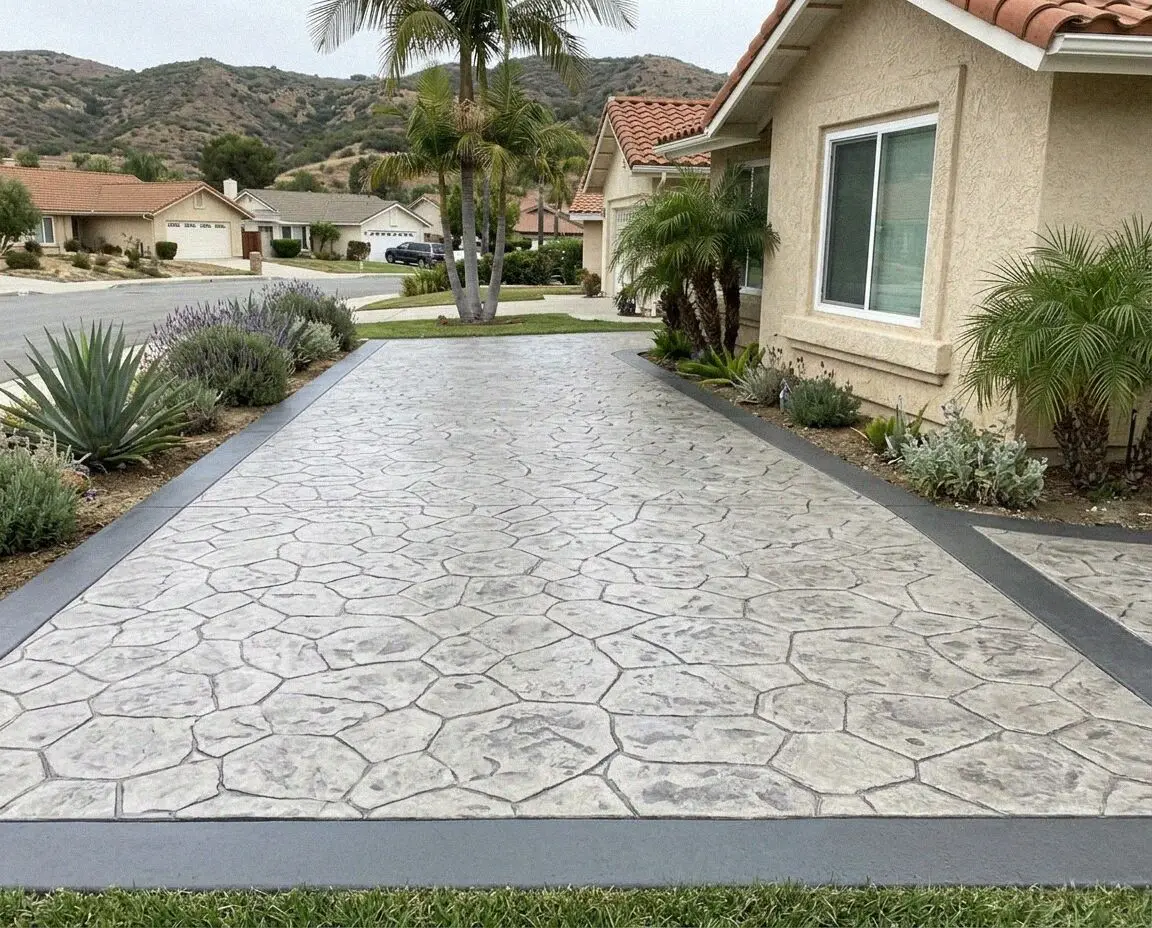
Stamped with a borderA yard seen from the family roomTextured, sealed every 2 to 3 years25 to 35 years, kept sealedBorder cast as the outer edge
Slab with cover footingsA patio cover or a pergola on itBroom, four post footings cast in30 to 40 yearsFootings set back from the edge

Broom finish is the least work and the plainest surface; stamped is the most of both and needs sealing. The estimate prices only the one you choose.

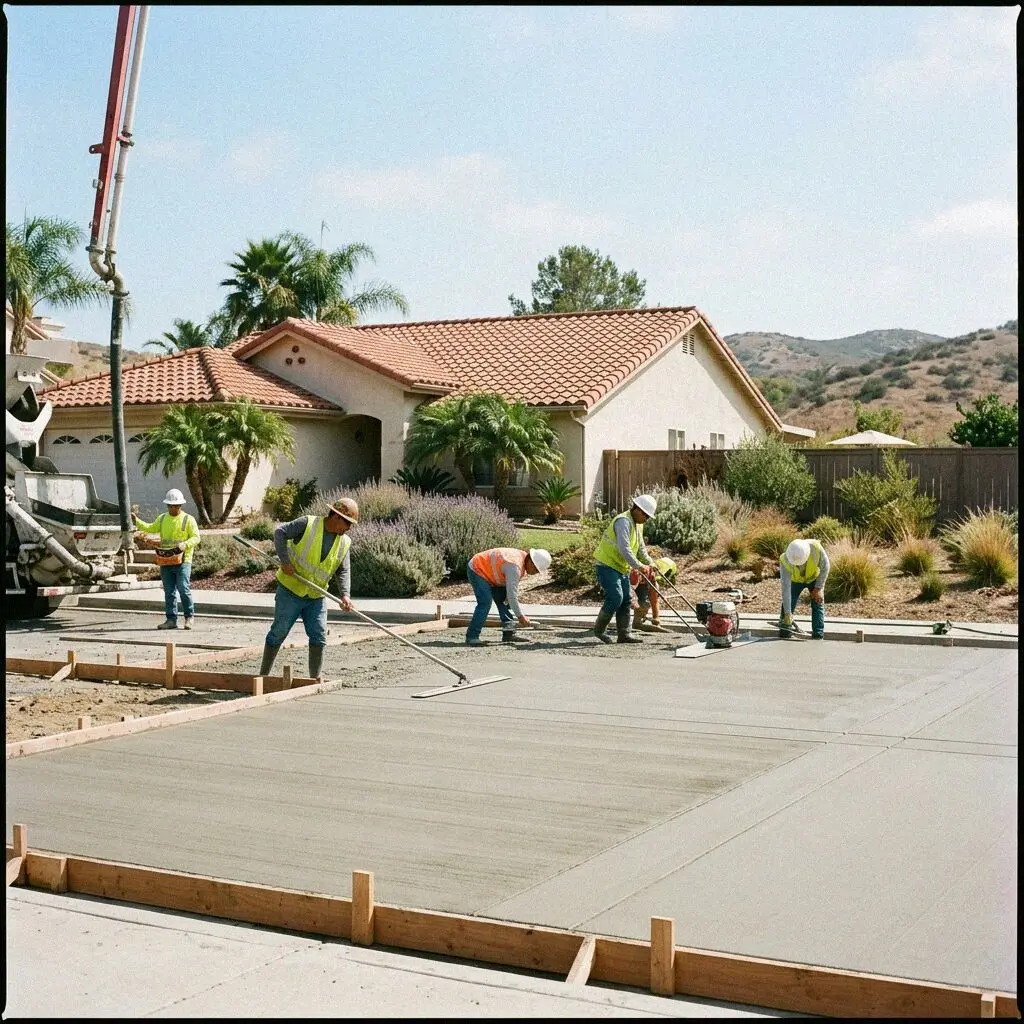
Concrete crew working on a rear patio behind a Mission Viejo home

Fill and fall

Why a Patio Drains First in Mission Viejo

A patio here sits on the fill side of the pad and, on the hillside tracts, above a slope, so the one question that matters before the size is where its water goes.

Every pad in the city was graded to a plan, with the yard sloping away from the house to a concrete swale along the side or a line of area drains at the back, and on the hillside tracts, from Castille to the streets above Lake Mission Viejo, a manufactured slope falls away behind the fence. The fill under the yard is the side of the pad that keeps moving, and it moves most where water gets in. The old patios we take out were nearly all poured flat, and the fill under them has gone.

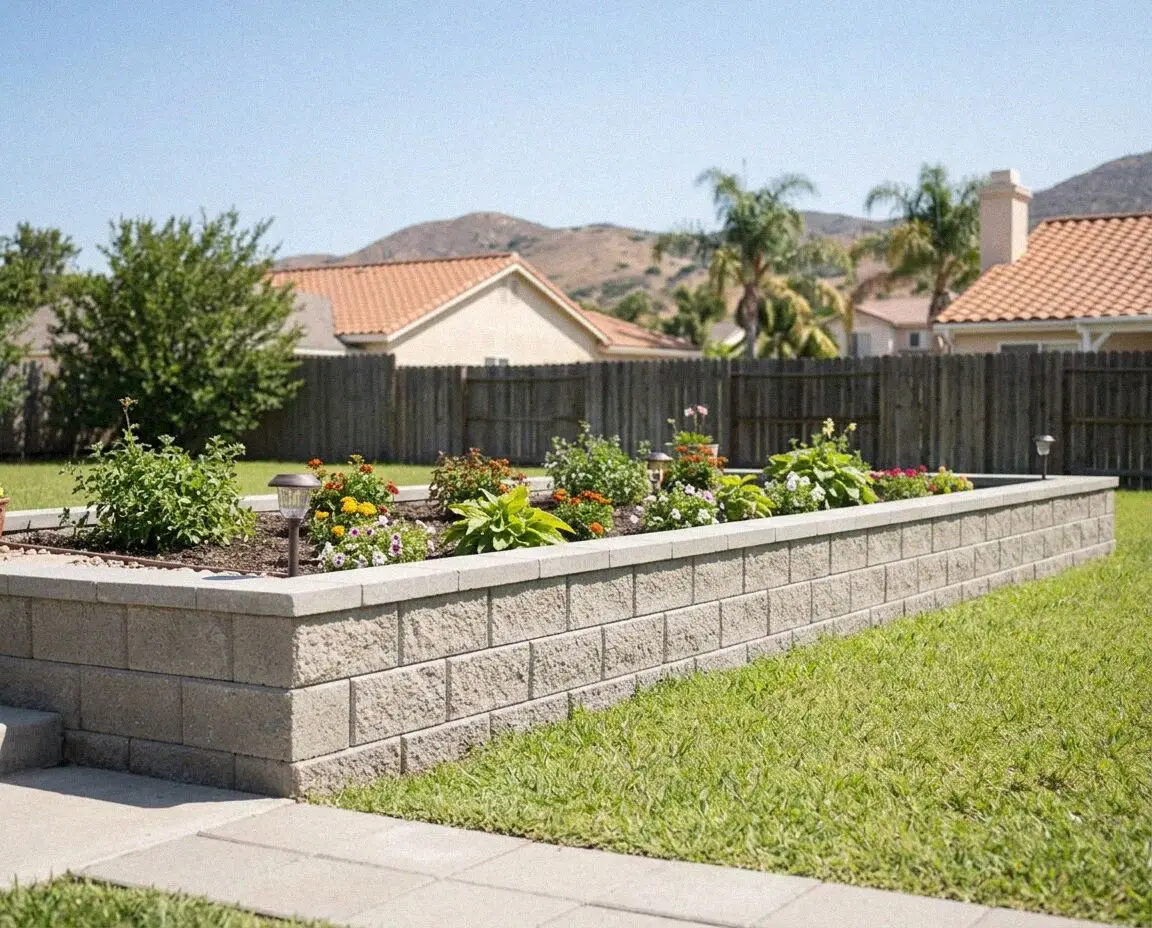
The house side has its own rule. A slab poured against the stucco has to finish 2 inches below the weep screed at the foot of the wall, and a good number of the patios here were poured over it in the 1980s, so the first thing we check is the wall. The slope side has another. A patio run to the edge sends its run-off over the fill below, so ours stop short, and where the yard needs holding level we build the retaining wall first.

From call to cure

How We Pour a Mission Viejo Patio

Five stages, the same crew at each, with the fall of the yard measured before any figure is written and the drain route drawn on the estimate. Where the yard is behind a side gate the concrete comes in by line pump from the street.

1

Measure the yard, find the fall

Trevor Lindqvist measures the slab, shoots the pad's fall to its drain, checks the screed and probes the fill. The figure is written on the spot.

2

Choose the finish and the week

You set the size and the finish, the drain route goes on the estimate, and a footing plan is filed with the City if a cover is going on the slab.

3

Break out and probe

The old slab and footings come out to soil, the fill is probed across the area and dug deeper where it gives, and the drain line is trenched.

4

Base, forms, pump and pour

Gravel compacted in lifts, forms set to the fall and the screed, the drain box placed, then one pour at 4 inches pumped in from the street.

5

Cut, cured and handed over

Joints cut the same afternoon, the slab kept wet for 7 days, the yard raked back, and the paperwork handed to you on the walk-through.

Behind the number

What Sets the Estimate on a Mission Viejo Patio

The area sets the figure first and how the water gets off it finishes it. Two yards the same size can be a day apart once the drain route is drawn, so nothing is quoted from a photo of the back fence. Every estimate is measured and written on site.

A tract house on a flat pad

The base job: the old slab out, one pour to the swale, a felt joint at the wall. What moves it is how far the concrete has to be pumped.

A condo or townhome yard

A small enclosed yard drains through the association's line, so the tie-in is scoped with its manager and the slab goes in by barrow.

A hillside lot above a slope

A rear yard ending at a manufactured slope needs a drain line run to the pad's outlet and the slab held back from the edge, and both add work.

A finish beyond broom

A salt finish adds a pass, a stamped patio adds a day and a sealer, and a cover adds four footings dug and inspected before the slab.

The visit and the written estimate cost nothing, and the call that books it comes within 1 business day. (657) 390-1824 or send us a message.

Ready to have your Mission Viejo yard measured?

Send the form or call, and someone rings back within 1 business day to fix a time. Trevor Lindqvist measures the yard, finds where it drains and writes the figure at your house, and it is yours to keep whether or not you book.

Request a Free Estimate

Written on site · No obligation

By submitting, you agree to our disclosure and consent terms, including being contacted by Saddleback Mission Viejo Concrete.

Patios we poured

Three Mission Viejo Patios, in Their Owners' Words

Three reviews left on Google, Facebook and the BBB, each about a rear patio rather than a drive or a pool deck, and each naming where its water goes now.

Google review

“Our Castille patio was the 1970s original and every storm left a pond against the house. They took it out, found the fill had gone soft under the low side, packed a new base and poured 400 square feet pitched to a drain box at the corner. First rain since, the slab was dry inside an hour.”

Ana R. of CastillePatio replaced with drain · Google · 2022
Facebook review

“The old slab behind our Canyon Crest house had been poured right over the stucco line and the wall was staining. They cut it out, set the new one 2 inches under the screed with a joint at the wall, and pumped it in over the side gate in one morning. The stain has dried out and not come back.”

Neil B. of Canyon CrestPatio rebuilt below the screed · Facebook · 2024
BBB review

“Our yard in Casta del Sol drops off to a slope and the old patio tipped toward it. Trevor Lindqvist stopped the new slab 3 feet back, ran the drain to the outlet at the side of the house and cast four footings for the cover. A winter on it and the cover posts have not moved a hair.”

Gil M. of Casta del SolPatio and cover footings · BBB · 2025

Before you book

Rear Patio Questions Asked in Mission Viejo

What moves the figure, how long the yard is out of use, who approves a cover, and what is guaranteed once the forms are off, answered for a rear yard slab on a pad here.

(657) 390-1824
  • What moves the estimate for a patio in Mission Viejo?

    The area, then the route the water takes off it. Every square foot is base, concrete and finish, and a drain box piped to the pad's outlet adds trenching to wherever the outlet is. Under that, fill that gives under the probe means more base on that side, and a yard reached only through a side gate means a pump for the morning. A cover adds footings and a permit. All of it is measured in your yard and written.

  • How long is the yard out of use for a new patio?

    Nine days for most, two on site and seven curing. The old slab comes out and the drain line is trenched on the first day, base, forms and the pour land on the second, and the slab is kept wet for seven days before furniture goes back on it, though you can walk on it after two. A stamped finish adds a day for the sealer. A cover's footings are inspected before the slab, which adds the City's visit to the calendar.

  • Is the drain line included in the patio estimate?

    Yes. The drain box, the pipe from it to the pad's existing outlet and the trench it runs in are on the estimate as their own lines, beside the demolition, base, pour and finish. What sits outside the figure is named at the visit rather than added later, such as an outlet that turns out to be crushed, a sprinkler valve that has to move, or tree roots under the old slab. The number you sign is the one on the bill.

  • Do I need a permit for a patio in Mission Viejo?

    Not for the slab, and yes for a cover on it. The California Residential Code exempts a patio slab on the ground inside your lot line, so no City permit is pulled for the concrete. A cover or a pergola on it is a structure, and the City of Mission Viejo issues a building permit for it and inspects the footings before they are poured. Most associations ask only that the cover be submitted.

  • Will homeowners insurance pay for a settled patio?

    Not usually. A patio that has dished, tilted toward the slope or cracked at a footing over years is settlement, and settlement is maintenance under every policy we have seen. The exception is a sudden covered event, a pool line or a hose bib line that burst under the slab and washed the base away, or a slope failure the policy names. Photograph the slab before anything is broken out, and ask your carrier first.

  • What does the guarantee cover on a new patio?

    How it was built: the base compacted, the 4 inches poured, the pitch to the drain, the joint at the wall, the joints cut on the grid and the finish, each printed on the estimate you sign. The slab carries a written workmanship guarantee against defects in how it was built. Leaf stains, fading on a color and a hairline inside a joint are the slab in use, not a fault. A slab that holds water is ours to fix.

  • What concrete and drain parts go into the patio?

    A 3,500 psi ready-mix with fiber through it, poured the morning it is batched over 4 inches of compacted gravel, with a felt expansion joint at the house. The drain is a cast-in box with a grate and 3-inch pipe run to the pad's outlet. Where a cover stands on the slab, its footings go to the depth the permit sets, on number 3 rebar. The mix, the base and the drain parts are named on the estimate.

  • Do I have to be home while the patio is poured?

    Only at the start and the end. The measuring visit needs you there to agree the size, the finish and where the drain goes, and the walk-through at the end is where you check the slab against the estimate. Between them the crew needs the side gate unlocked, a hose bib, and the street kept clear for the pump truck on the morning of the pour. Pets stay in that day, because a paw print in a slab is there for 30 years.

Towns we pour in

Concrete Patios Around Mission Viejo

The eight nearest towns on our list, each with the straight-line distance from the office on La Paz Road beside it. Every patio is measured in the yard before a figure is written.

Show All Areas We Serve

Book a free measure of your Mission Viejo patio

Call or send the form and you hear back within 1 business day. Say roughly how big the yard is and whether it is reached through a side gate, and the visit can be booked for a day inside the same week.