Serving Mission Viejo, CA and surrounding areas.(657) 390-1824
Saddleback Mission Viejo Concrete

Concrete Parking Lot Building in Mission Viejo, CA, Built From the Downhill Edge In

Saddleback Mission Viejo Concrete pours lots for the centers, clubhouses and churches on graded benches beside the parkways, deeper over the fill edge. Every estimate is measured and written on site.

Google reviewsFacebook reviewsBetter Business Bureau reviews5.0 Stars Rated by our customers · Google, Facebook and the BBB
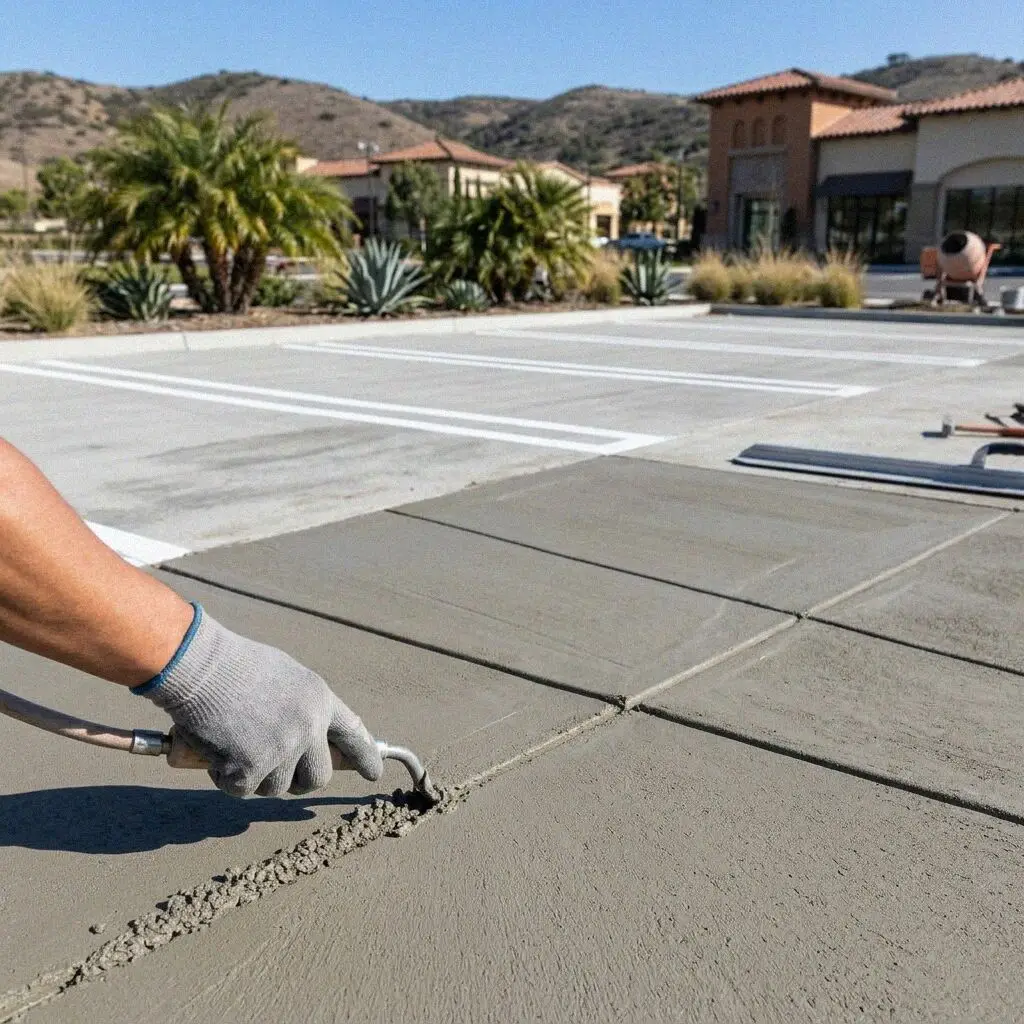
Crew pouring a concrete parking lot at a Mission Viejo shopping center
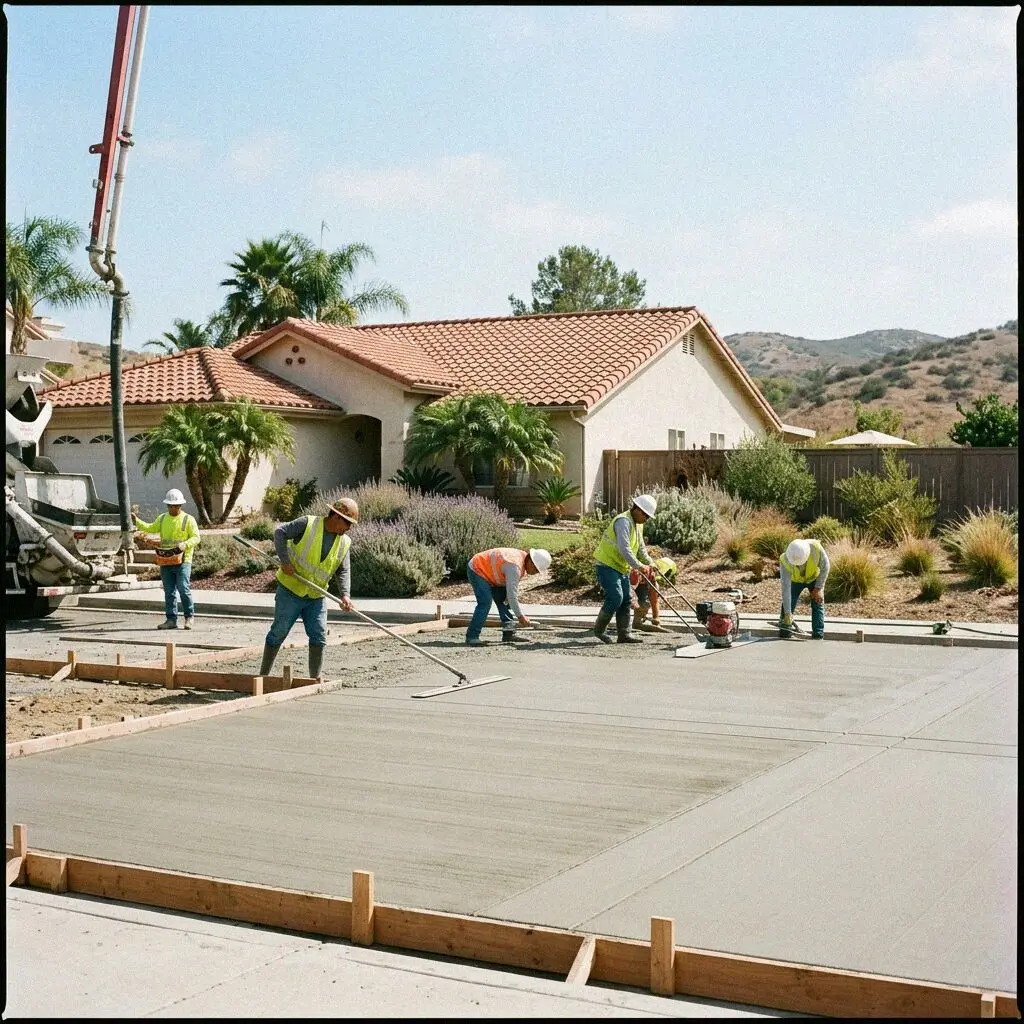
Screeding fresh concrete between forms on a Mission Viejo parking lot

How a lot is built here

Pouring a Parking Lot on a Mission Viejo Bench

A parking lot in Mission Viejo fails at its outer rows first. Nearly every commercial pad here was made the way the housing pads were, cut into the hill on one side and built out with fill on the other, and the stalls along the downhill edge stand on that fill. Asphalt laid across it sags along the last row inside ten years, and the water then stands at the curb or goes over the slope. Concrete built deeper along that edge, on base compacted in lifts, holds for 30 years or more.

Saddleback Mission Viejo Concrete builds lots for the neighborhood centers on Marguerite, Alicia and La Paz, for association clubhouses and guest parking, and for the churches and schools that own the largest lots in the city. Trevor Lindqvist measures each one himself with a level and a probe rather than the old stall plan, because the drawing shows where the cars go and not where the fill starts. The crew pours in sections so a center never closes.

Lots are built to the California Building Code under a CSLB C-8 concrete license, with liability insurance on every job. The accessible stalls and the path to the door follow Chapter 11B, which a rebuild has to bring current, and the City of Mission Viejo checks the drainage before it issues the permit. The finished lot carries a written workmanship guarantee against defects in how it was built.


Repair or rebuild

When is a Mission Viejo parking lot past patching?

The last row lower than the aisle

Sight along the outer stalls from the drive aisle. If the row against the slope has dropped an inch or two below the aisle, the fill it sits on has settled and the asphalt has gone down with it. Each patch laid over that row settles again next winter, on the same ground that moved.

Water standing at the outer curb

A lot on a bench was graded to shed water toward one corner, and once the outer rows sink the water gets there and stops. A puddle that lasts two days after rain along the downhill curb means the fall has reversed, and a wet base under asphalt cracks into a web in a season or two.

Alligator cracks in the drive aisle

The aisle carries every car in the lot twice a visit and the trash truck once a week, and asphalt carries that load on its base alone. A web of cracks across the aisle means the base has broken up under it. Sealing the surface keeps water out for a season and strengthens nothing.

The slope edge breaking away

Where a lot ends at the top of a descending slope, an edge without a curb footing has nothing holding it. Once the asphalt crumbles at the lip, water runs over the slope, cuts a channel into it, and the next length of edge follows. The lot is undermining its own ground.

In every lot

What Goes Into a Mission Viejo Parking Lot

Eight things are in every lot at no separate line, each one answering what a graded bench does to a slab: fill settling under the outer rows, water with only one way off the bench, and a slope edge with nothing under it.

The old asphalt comes out

Asphalt is milled and hauled, and the old base broken up where it has failed, in sections so the rest of the lot keeps trading.

Fill line found and marked

The bench is probed along its length until the cut side and the fill side are marked on the plan, before any base is ordered.

Base compacted in lifts

Class 2 base placed in 4-inch lifts and plate-compacted, deeper over the fill side, so the lot bears on ground that has been tested.

Outer rows poured deeper

The downhill rows and the drive aisle are poured 6 inches on rebar, the car stalls 5 inches, because that is where load and settlement meet.

Curb poured on a footing

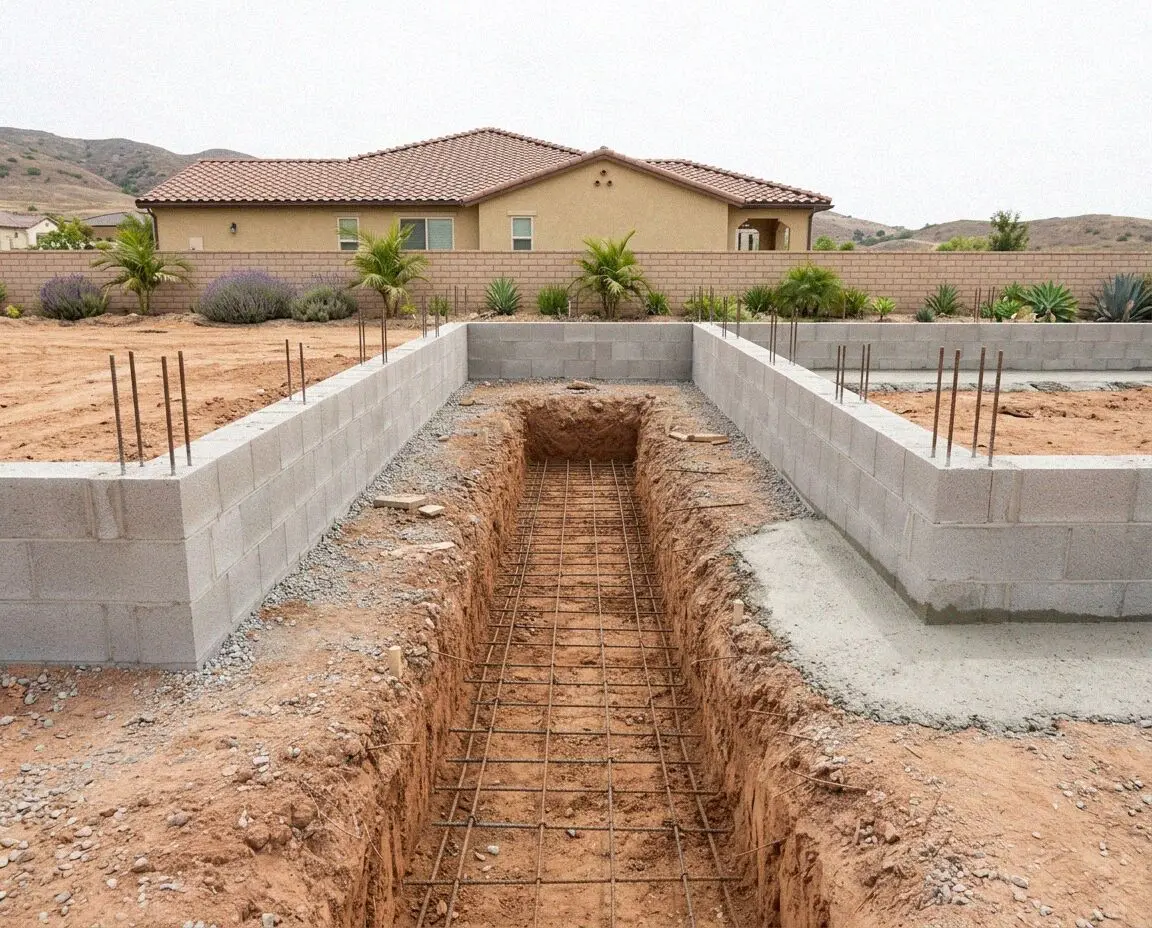
The perimeter curb at the slope edge is cast on its own footing, so the lot is held at its lip rather than resting on the fill.

Joints on a 12-foot grid

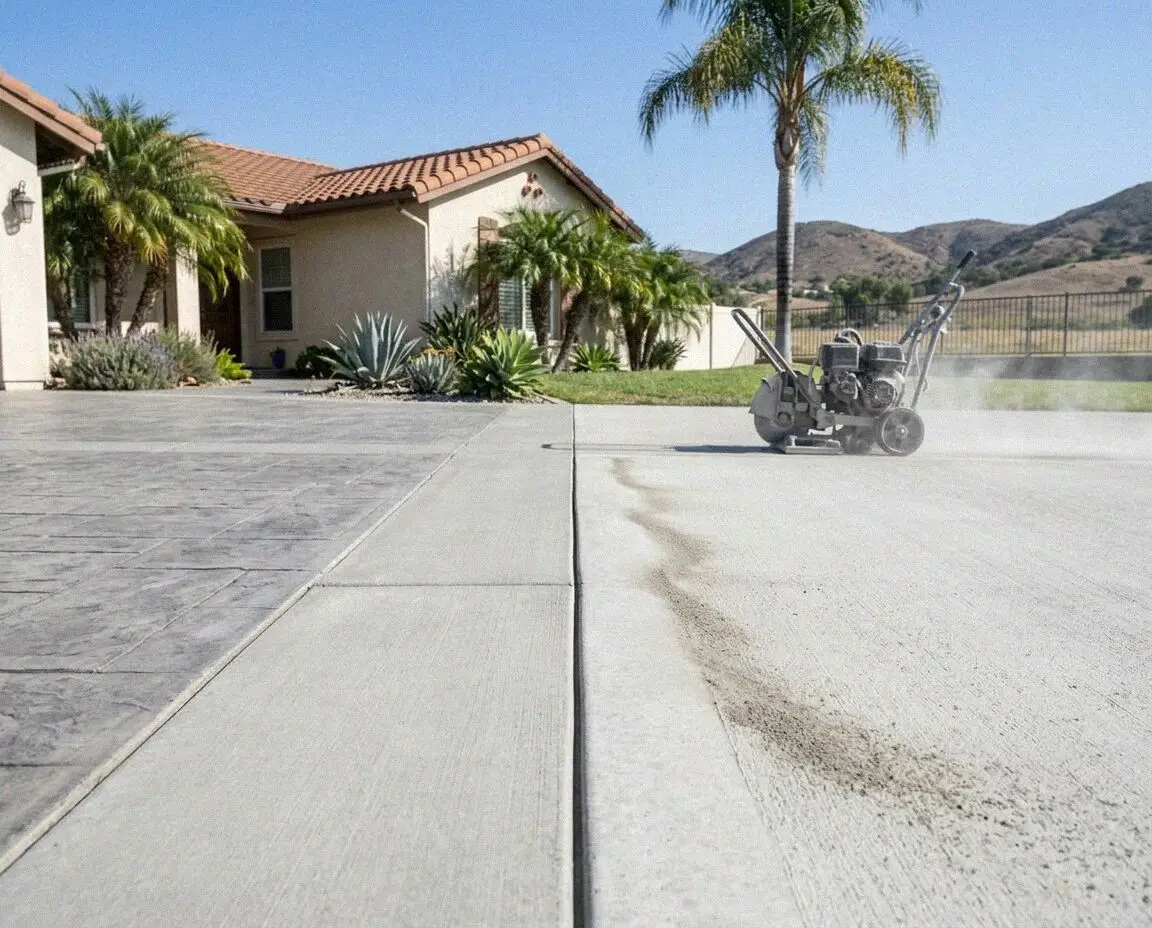
Saw cuts go in inside 12 hours at 12 feet each way, lined up with the stall stripes so a crack lands under a painted line.

Fall kept on the bench

The lot drains to an inlet on the bench, never over the slope, with the grade shot from the far corner to the drain in one pass.

Stripes and guarantee

Stalls striped with the accessible bays to Chapter 11B, the lot walked with you against the estimate, and the written guarantee handed over.

How it can be built

Mission Viejo Parking Lot Builds, Compared

Four ways to build a lot on a bench, set against who parks on it and what the trash truck does at the enclosure. The base and the edge footing are the same in all four, so the table is about the slab and the steel in it.

OptionSuitsSteel in itLifeBack in use
5-inch broom, car stallsA center or clubhouse lot of cars onlyFiber through the mix30 years or more7 days for cars
6-inch aisle and edgesAny lot a trash truck crosses weeklyNumber 4 rebar at 18 inches30 to 40 years7 days, 28 for the truck
8-inch enclosure apronThe bay where the truck lifts the binNumber 4 rebar both ways40 years or more28 days before the truck
Concrete aisle onlyA large lot rebuilt in stages, stalls in asphaltRebar in the aisle only30 years aisle, 15 stalls3 days for the stalls

The concrete aisle with asphalt stalls costs least to lay and the full lot least to keep; the truck apron at the enclosure is the one piece nobody can add afterward.

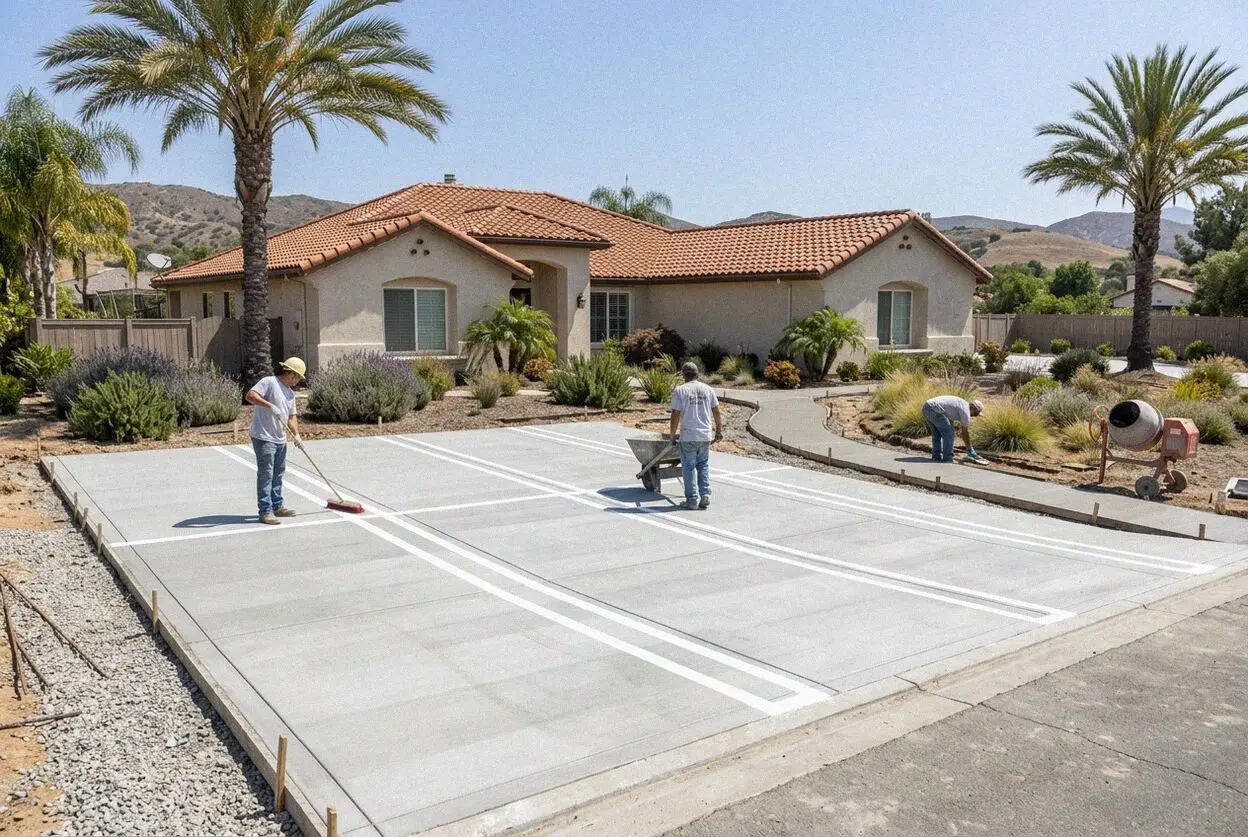
Concrete crew at work on a commercial parking lot in Mission Viejo

Benches and parkways

Why a Parking Lot Here Starts at Its Edge

Two things decide a lot in Mission Viejo and neither is the stall count: the bench it was graded onto, and the one place the water is allowed to leave it.

The city was laid out from the mid 1960s with its shopping on flat benches cut beside Marguerite, Alicia, La Paz and Crown Valley, and the housing on the pads above and below. A bench was made like a pad, cut into the siltstone uphill and built out with fill downhill, and a lot poured across the two rests half on rock and half on ground that goes on settling for decades. Asphalt was laid one thickness across the bench, and the outer rows over fill have sunk on nearly every center.

Water is the second. A pad above the street sheds into the parkway gutter, but a bench sheds into whatever lies below it, and for most lots here that is a landscaped slope and then somebody's back fence. The fall has to end at an inlet on the bench and a pipe down the slope, which the City checks on the plan before the permit. Where a lot ends at the top of that slope we cast the curb on a footing, and where the slope has been cut into we build the retaining wall first.

From call to stripes

How We Build a Mission Viejo Parking Lot

Five stages, the same crew at each, and the person who probes the bench is the one standing on it at the pour. The lot is split into sections before anything is milled, so tenants keep a way in for the whole job.

1

Measure the lot, probe the bench

Trevor Lindqvist shoots the fall, finds the fill line with a probe and marks where the water leaves the lot. The figure is written before he goes.

2

Choose the build and the sections

You set the depths against the truck route, agree the section order with your tenants, and take a start date. The permit is filed with the City.

3

Mill out and dig the outer rows

The asphalt is milled and hauled a section at a time, and the outer rows are dug until the fill proves under a plate rather than a boot.

4

Base, footing, forms, concrete

Base compacted in lifts, the edge footing poured, forms set to the fall, and the section placed before 8 AM and broomed across the aisle.

5

Cut, cured, striped, handed over

Joints sawn inside 12 hours, the slab kept damp seven days, the stalls and accessible bays striped, and the walk-through done on the plan.

Behind the number

What Sets the Estimate on a Mission Viejo Lot

The fill line sets the figure before the square footage does. Two lots with the same stall count can be days apart once the probe finds where the bench was built out, so nothing is quoted from a plan. Every estimate is measured and written on site.

A center on the parkway

A neighborhood center's lot is decided by its sections, how many the tenants need to stay open, and by how far the outer rows sit over fill.

An association's guest lot

A condo community's guest parking and clubhouse lot runs its own trash truck route, so the aisle depth is set by that and the stalls by cars.

A church or school lot

The largest lots in the city, poured over several weeks around services or terms, with the drain run and the slope edge as their own lines.

Aprons, color and cutting

An 8-inch truck apron at the enclosure, an integral color, or a lot sawn out in stages around live tenants each adds its own line to the figure.

The visit and the written figure cost nothing, and the call that books it comes within 1 business day. (657) 390-1824 or send us a message.

Ready to have your Mission Viejo lot measured?

Send the form or call, and someone rings back within 1 business day to fix a time. Trevor Lindqvist shoots the fall, probes the bench and writes the figure at your lot, section by section, for you to take to your board or your tenants.

Request a Free Estimate

Written on site · No obligation

By submitting, you agree to our disclosure and consent terms, including being contacted by Saddleback Mission Viejo Concrete.

Lots we rebuilt

Three Mission Viejo Lots, in Their Owners' Words

Three reviews left on Google, Facebook and the BBB, each about a parking lot rather than a driveway, and each naming the row that had sunk or the section order that kept the doors open.

Google review

“Our center on Alicia had the whole back row sunk against the slope and a lake there every February. They probed it, dug that row out to firm ground, poured it at 6 inches on rebar and took the water to a new inlet. Two winters on and the row is level with the aisle.”

Marcus D. of Aegean HillsCenter lot rebuild · Google · 2025
Facebook review

“I manage the guest parking for a community off Jeronimo, and the board wanted it done without losing the clubhouse lot. Trevor split it into three sections and poured one a week, so there were always stalls open. The trash truck has crossed the new aisle every week since and left no mark.”

Elena R. of CordovaAssociation guest lot · Facebook · 2024
BBB review

“Our church lot on the bench above the creek was breaking off at the edge and the slope below was cutting into a gully. They poured a curb on a footing along that whole side, rebuilt the fall to a drain and piped it down the slope. First storm since, the slope stayed dry.”

Paul H. of Pacific HillsLot edge and drainage rebuild · BBB · 2023

Before you book

Parking Lot Questions Asked in Mission Viejo

What a rebuild costs in closed stalls, what the estimate covers, what the City checks, and what is guaranteed once the stripes are on, answered for a lot on a bench here.

(657) 390-1824
  • What makes one parking lot estimate larger than another?

    Three things, and only one of them is the stall count. How much of the lot sits over fill sets the dig and the base; the truck route sets how many square feet go in at 6 or 8 inches rather than 5; and the drainage sets whether an inlet and a pipe down the slope are new lines or existing ones. Two lots of 40 stalls, one on cut and one on fill, are different jobs. All three are measured at the lot and written down.

  • How long is a parking lot closed while it is rebuilt?

    No section longer than about 10 days, and never the whole lot at once. A section is milled and dug on the first two days, based and formed on the third, poured on the fourth, and kept damp for seven days before cars go on it. A lot of 60 stalls is usually three sections, so the job runs three to four weeks with two thirds of the lot open throughout. The section order is agreed with your tenants first.

  • Does the estimate cover the old asphalt and the striping?

    Yes. Milling the asphalt, hauling it, breaking out failed base and restriping the new lot with its accessible bays are all written into the figure. What sits outside it is named at the visit rather than added later: a storm drain connection the City asks for, a light pole base that has to move, or a slope that needs a wall before the lot can be built. The number you sign is the one on the bill.

  • Which parts of a parking lot does the City permit?

    Any change to the drainage, and every rebuild changes something about the drainage. The City of Mission Viejo's Building Division reviews the grading and where the water leaves the bench, and Chapter 11B of the California Building Code sets the accessible stalls and the path to the door, which a rebuild has to bring current whatever was there before. We file it all and meet the inspector on the day.

  • Will property insurance pay to rebuild a sunken lot?

    Almost never. A lot that has settled over fill for 20 years is wear, and a policy treats settlement, cracking and drainage failure as maintenance rather than as a sudden loss. The exception is a covered event, a burst main washing the base out or a vehicle striking the edge. Photograph the lot before anything is milled, and ask your carrier and your association's carrier before you book us.

  • What is guaranteed once the lot is finished?

    How it was built: the depth dug over fill, the base compacted, the thickness poured in each zone, the footing under the edge curb and the fall to the drain, with those terms printed on the estimate you sign. It is a written workmanship guarantee against defects in how it was built. Tire marks, oil, wear at the enclosure and the slope below the lot moving sit outside it. A fault in the build, we come back and fix.

  • What concrete and steel go into a parking lot?

    A 4,000 psi ready-mix placed the morning it is batched, Caltrans Class 2 aggregate base underneath it, and number 4 rebar on an 18-inch grid through the aisle, the outer rows and the truck apron. The car stalls at 5 inches carry fiber in the mix. Joints are sawn at 12 feet, and the stripes go on after 28 days so the paint bonds. The mix, the steel and each zone's depth are named on the estimate.

  • Does someone from the property have to be on site?

    Only for the measurement at the start and the walk-through at the end. In between the crew needs the section fenced, the cars kept off it and the trash pickup moved to an open bay for the week, which we arrange with the hauler. A manager who wants to see the fill line open or the steel before the pour is welcome, and the inspector's visit is timed so you can be there for it if you choose.

Towns we pour in

Concrete Parking Lots Around Mission Viejo

The eight nearest towns on the list, with the straight-line distance from the office on La Paz Road beside each. Every lot is probed and measured at the property before a figure is written.

Show All Areas We Serve

Book a free measure of your Mission Viejo lot

Call or send the form and you hear back within 1 business day. Say roughly how many stalls the lot has and whether a trash truck crosses it, and the visit can be booked for a day inside the same week, at an hour the lot is quiet.